Ranking tracking starts with a disciplined keyword set
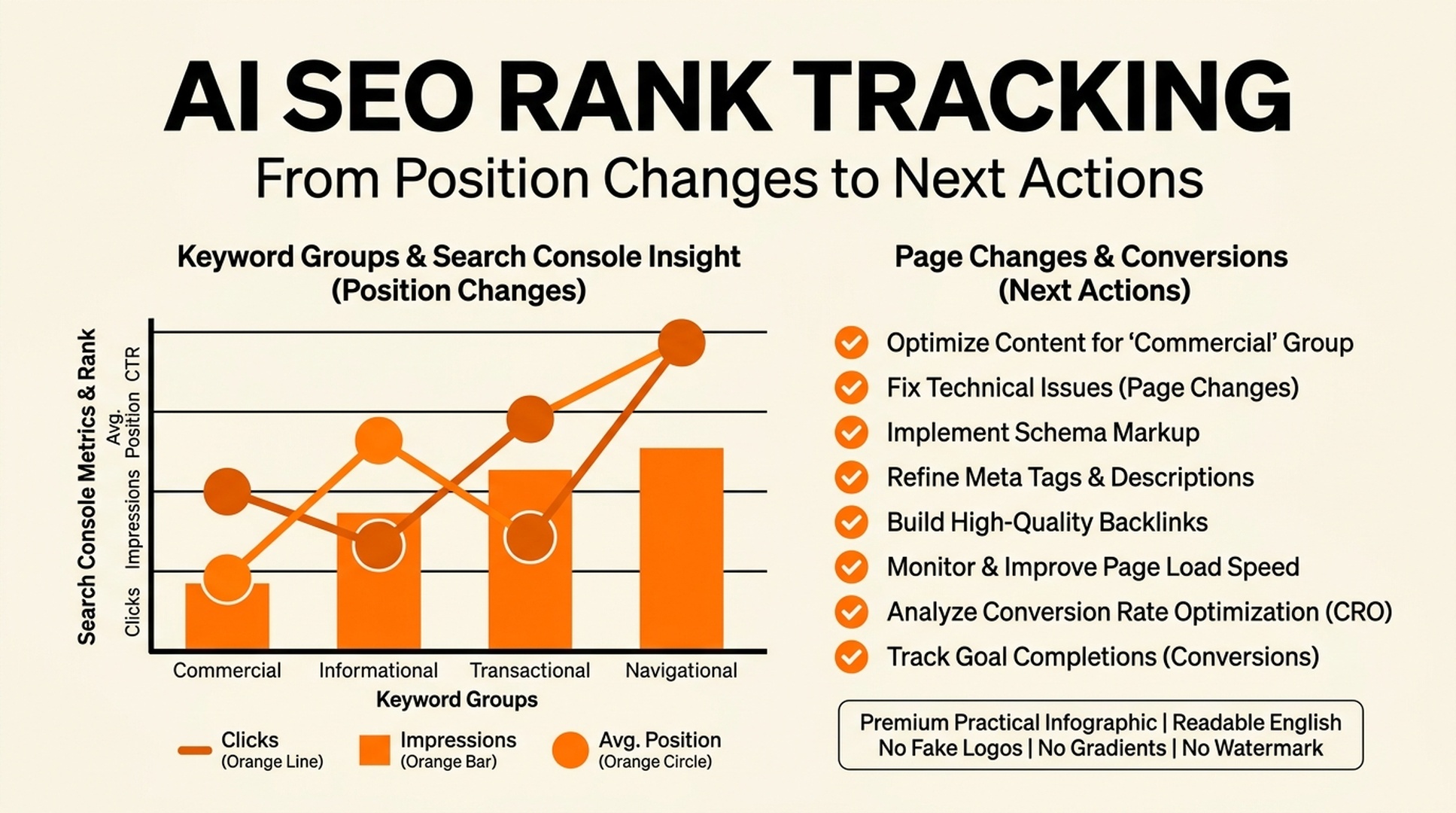
AI SEO platforms typically track ranking performance by checking a defined set of keywords at scheduled intervals, across selected locations, devices, and search engines. AI then helps group the results by topic, page, intent, or business line; flags notable changes; and suggests possible causes or next checks.
The model is useful for triage. It cannot turn rankings into a reliable growth story by itself. A position change has to be read alongside Search Console impressions and clicks, the actual result page, technical site state, seasonality, and conversions.
What the platform is really collecting
Signal | What it can show | Important limitation |
|---|---|---|
Keyword position | Relative visibility for a tracked query | Results vary by location, device, personalization, and features |
Share of voice | How often a domain appears across a tracked set | Depends entirely on the quality of the tracked set |
SERP features | Whether maps, videos, shopping, answers, or other features appear | Presence does not reveal click impact by itself |
Search Console data | Impressions, clicks, CTR, and average position from Google | Aggregated averages can hide page- and query-level shifts |
Page changes | Updates, releases, redirects, or technical events | Correlation still needs investigation |
Conversions | Value after the click | Requires correct analytics setup and enough volume |
Set up groups that mirror how the business works
Tracking 5,000 disconnected keywords usually creates noise. Group keywords around a product line, audience problem, location, funnel stage, or content cluster. Associate each group with an owner and a principal page where possible.
For example, a SaaS company might track product-category queries, integration queries, competitor comparisons, use-case queries, help-center questions, and brand terms separately. A local business may split service plus location terms from informational questions. When a group moves, the team knows which decision to inspect.
Where AI improves the monitoring loop
AI can summarize large change sets, detect repeated query language, map queries to likely URLs, and produce a first-pass explanation of why a group may have changed. It can also compare annotation logs against the timing of movement: a site migration, a content refresh, a competitor launch, or a seasonal event.
Treat those explanations as hypotheses. A reliable process checks the live SERP and the page before acting. A sudden drop may reflect a tracking location change, an indexation error, a temporary result feature, or demand that moved elsewhere. It is dangerous to rewrite a page before checking whether it is even indexed.
The weekly ranking review
Use one short recurring review instead of reacting to every daily fluctuation.
- Look for movements across a keyword group, not a single term.
- Check Search Console impressions and clicks for the matching pages.
- Inspect the current SERP and compare the dominant format with your page.
- Check indexation, crawl, canonical, and release changes.
- Separate a technical issue, demand shift, competitor change, and content gap.
- Assign one next action with an expected signal to watch.
This gives AI a useful role: it can prepare the evidence packet, while the owner makes the diagnosis.
Rankings are not the same as traffic
Position one can earn fewer clicks than position four when answer features, ads, maps, shopping results, or a strong brand result absorb attention. The reverse can also happen when a lower position perfectly matches a niche query. Track ranking changes, but pair them with click-through rate, landing-page engagement, and a conversion or qualified-action metric.
Google Search Console is valuable here because it reports actual search impressions and clicks. Its average position should be read as an aggregated signal, not as a daily rank tracker replacement. Combining the two views produces a more honest picture.
Add AI-search visibility without confusing the reports
Answer engines and AI features are not measured exactly like conventional rankings. They require a defined prompt library, repeated checks, evidence capture, and a clear distinction between a mention, a citation, and a referral. Keep those reports adjacent to rank tracking rather than mixing them into a fictional single position.
Auspia's AI Search Visibility Checker can support that second view: which priority buyer prompts surface the brand or its content, and what competing sources appear. The same principle applies: use the trend to decide what to inspect, not to claim a guaranteed outcome.
What a useful dashboard includes
A dashboard should answer four questions: what moved, where it moved, why it may have moved, and what the team will do next. Include tracked-topic visibility, Search Console clicks and impressions, pages with the largest changes, annotations for releases, technical alerts, and the associated business metric. Leave out charts that nobody uses to make a decision.
Add annotations before asking AI for an explanation
Mark important events beside the data: a migration, redirect release, major content refresh, template update, pricing change, tracking change, campaign launch, or predictable seasonal period. Without an annotation log, an AI summary can easily invent a tidy explanation after the fact. With one, it can help the team ask a sharper question: did the movement begin before or after the change, and did it affect the pages we expected?
Keep entries brief, dated, and assigned to an owner. Over time, the log becomes useful operating memory. It explains why a page was changed and makes later ranking reviews less dependent on whoever happened to be in the meeting.
Alert on meaningful patterns, not every fluctuation
Daily movement is normal. Set alerts for a sustained drop across a priority keyword group, the disappearance of a high-value indexed URL, a sharp traffic decline that coincides with a technical event, or a conversion fall alongside organic visibility. AI can filter the routine noise and prepare affected pages and queries. A human should decide whether the signal warrants an intervention.
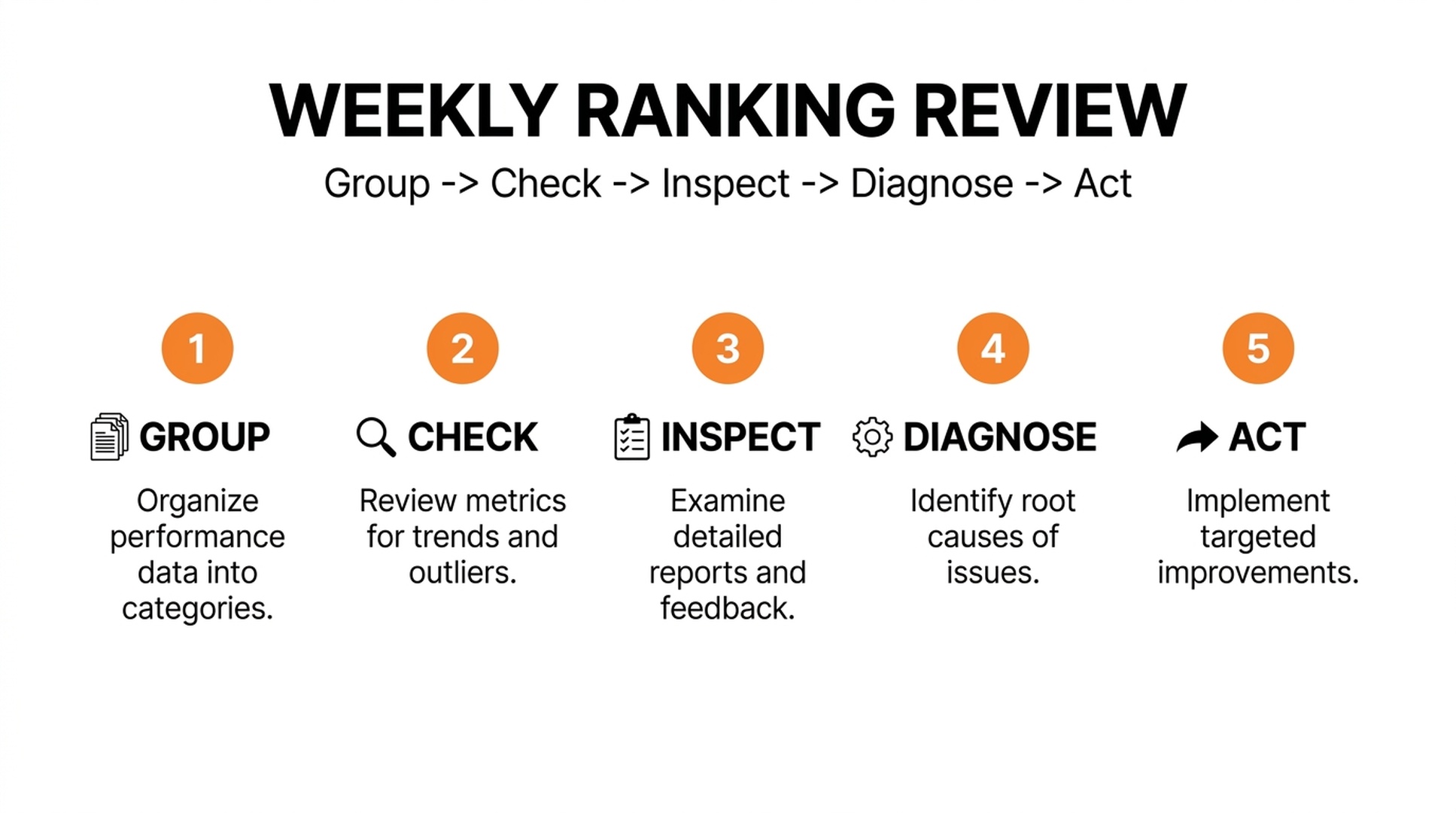
Five-step weekly process for reviewing meaningful ranking changes
FAQ
How often should rankings be tracked?
Weekly is sufficient for many sites. Daily tracking can help high-volume, volatile, or ecommerce categories, but it also increases the chance of reacting to normal noise.
Can AI explain a ranking drop accurately?
It can summarize likely causes and point to evidence. A human should confirm indexation, SERP changes, technical state, demand, and competitor activity before making a fix.
Why do rank trackers and Search Console disagree?
They measure different things. Trackers check selected queries in selected settings. Search Console aggregates actual Google impressions and clicks across many contexts.
Author: Leo Harrington, SEO Analytics Translator for 500+ Executive Reports at Auspia. Leo writes about dashboards, reporting discipline, and turning search data into decisions leaders can use.