The short answer
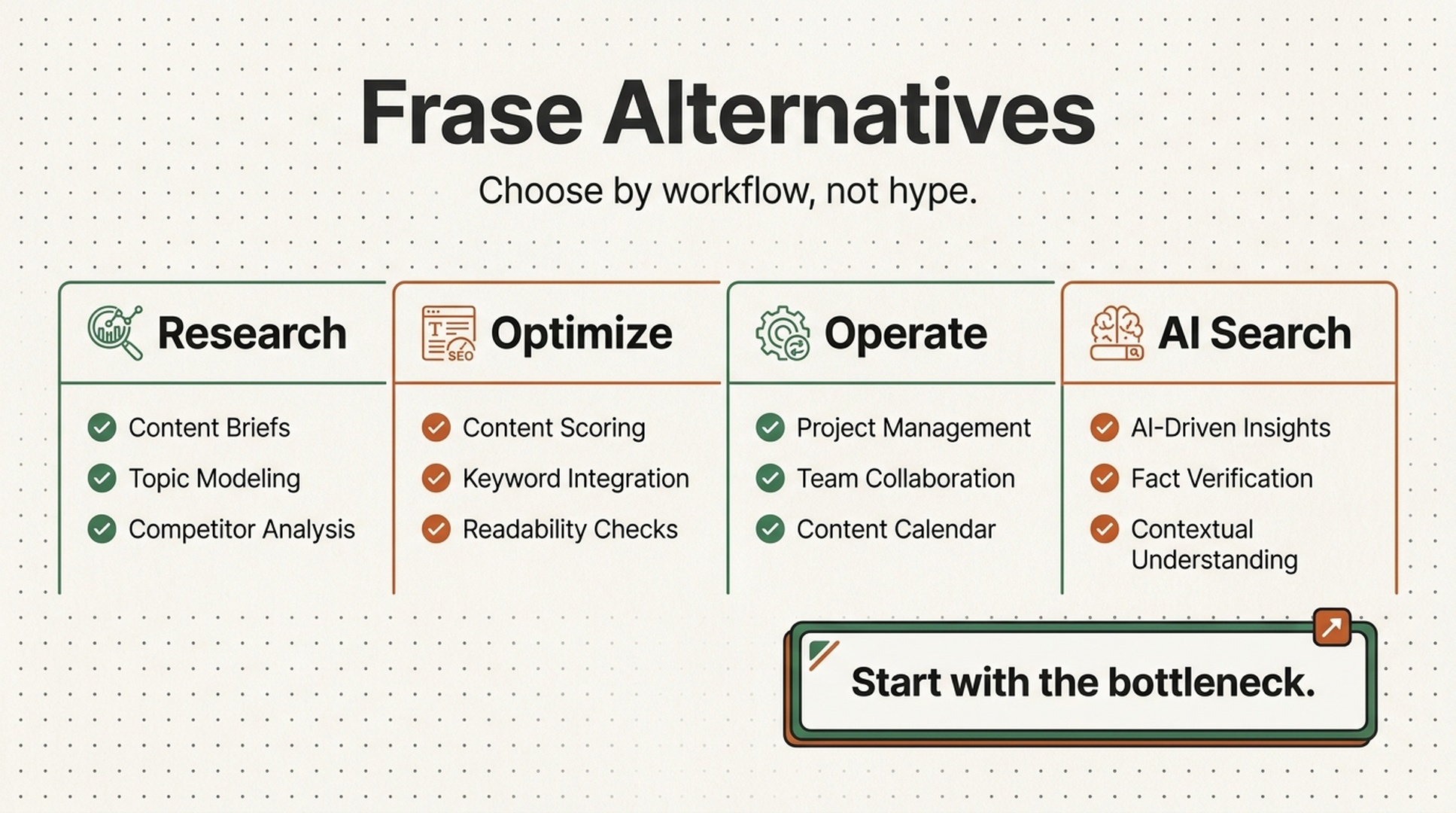
The best Frase alternative depends on why Frase stopped fitting your workflow. Choose Clearscope when the editorial team needs restrained optimization guidance. Choose Surfer when a writer needs a hands-on content editor. Choose MarketMuse when you are planning authority across a large site. Choose Keyword Insights when clustering and content planning are the bottleneck. Choose Auspia when the gap is broader: a team needs to connect SEO content work with content automation and AI-search readiness. Auspia plans start at $49 per month.
There is no honest universal winner. Frase sits at the intersection of SERP research, content briefs, and AI-assisted drafting. A replacement only makes sense if it removes the constraint that brought you here: thin briefs, noisy scoring, a slow planning process, weak workflow control, or a content program that has no view of how pages appear in AI-generated answers.
This guide compares eight credible Frase alternatives by job to be done, not by a made-up overall score. Product features and plans change often, so verify current limits, integrations, and pricing on each vendor's site before buying.
Start with the reason you are leaving Frase
"Frase alternative" is a comparison query, but it hides several different decisions. Teams often change tools because they dislike one part of a workflow and accidentally buy another tool with the same limitation.
If this is your problem | Look for this capability | Strong starting points |
|---|---|---|
Briefs take too long to build | Faster SERP review, clean outlines, reusable briefing templates | Clearscope, Keyword Insights, Semrush Content Toolkit |
Writers need more real-time direction | In-editor optimization with clear topic and structure prompts | Surfer, Clearscope |
You publish across many related topics | Topic clustering, content inventory, authority planning | MarketMuse, Keyword Insights |
Drafts sound generic or need strict brand control | Brand rules, reusable voice guidance, editorial review gates | Writer, Jasper |
Content stops at the document stage | Brief-to-draft-to-approval-to-publish workflow | Auspia, AirOps |
Google rankings are only part of the visibility target | AI-search monitoring, answer-ready content checks, evidence gaps | Auspia |
That last row matters more than it did a few years ago. A content brief can still be excellent for a traditional organic result and yet fail to state the facts, comparisons, caveats, and source material that make a page easy for answer engines to reuse. Do not replace an SEO tool solely because it says "AI" on the pricing page. Replace it when your team can point to a missing workflow.
The Frase alternatives compared
Tool | Best fit | Research and briefs | On-page optimization | Planning and operations | AI-search readiness | Pricing note |
|---|---|---|---|---|---|---|
Auspia | Teams that need SEO, content automation, and AI-search work in one operating loop | Strong | Strong | Strong | Strong | Starts at $49/month |
Clearscope | Editorial teams that want concise optimization guidance | Strong | Strong | Moderate | Limited | Check current plans |
Surfer | Writers who prefer a detailed live content editor | Strong | Strong | Moderate | Limited | Check current plans |
MarketMuse | Large sites planning topical authority and refreshes | Strong | Moderate | Strong | Limited | Check current plans |
Keyword Insights | Keyword clustering and content-plan workflows | Strong | Limited | Strong | Limited | Check current plans |
Semrush Content Toolkit | Teams already working in Semrush | Strong | Moderate | Moderate | Limited | Check current plans and add-ons |
Writer | Enterprise teams with governance and brand controls | Limited | Limited | Strong | Limited | Check current plans |
Jasper | Marketing teams creating content across channels | Moderate | Limited | Moderate | Limited | Check current plans |
The table is deliberately blunt. "Limited" does not mean a product is bad. It means that capability is not the reason to choose it over a tool built for that job. A marketing writing platform may produce a useful first draft; that does not turn it into a topical authority system. In the same way, a content optimizer may give useful terms to cover while doing little to help an editor decide what deserves publication.
1. Auspia: best when the replacement decision is bigger than a content editor
Auspia is a strong Frase alternative for teams that no longer want research, drafting, optimization, AI visibility, and publishing to live as separate handoffs. Its value is in the working loop: identify a search opportunity, build or improve a page, check whether the content has clear answer material and evidence, then track what needs attention.
That makes it a better fit for a lean growth team than a standalone editor if the team is managing a content program rather than a few articles a month. The trade-off is simple: if all you need is a lightweight scoring panel in a document, a narrower tool can be enough.
Price: Auspia starts at $49/month. Confirm plan limits and included capabilities before purchase.
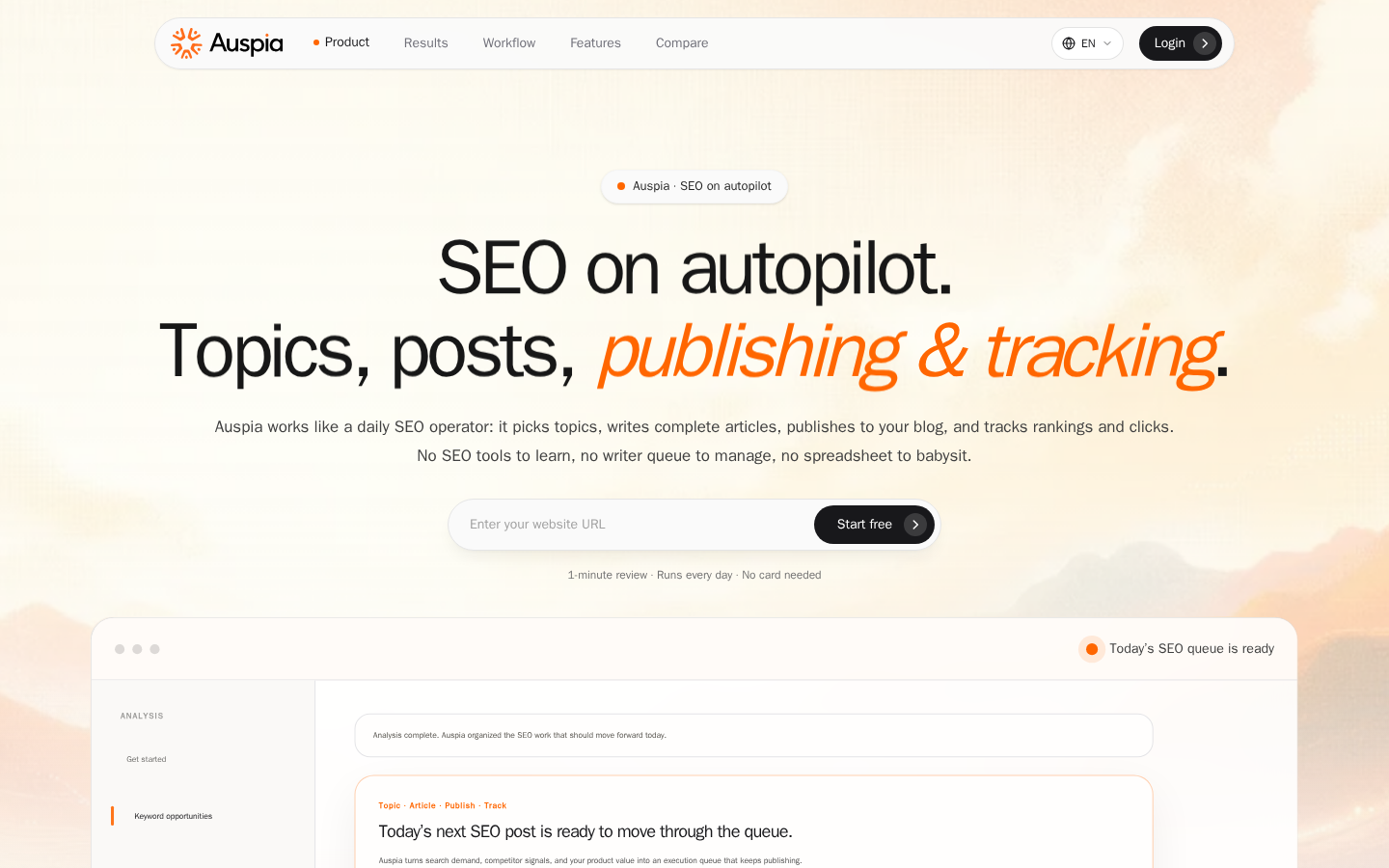
Auspia's public homepage, captured in a logged-out desktop view on July 17, 2026. Source: [auspia.ai](https://auspia.ai/).
2. Clearscope: best for editorial restraint
Clearscope is often a sensible move for teams that want content optimization without turning writers into score-chasers. Its workflow is familiar: review a query, create an outline, draft against topical guidance, and let an editor decide when the page is finished.
Choose it when your team already has a functioning keyword and publishing stack, but needs a dependable editorial layer. It is less compelling when the real issue is content planning, automation, or AI-search measurement. In those cases, an excellent editor is still only one part of the system.
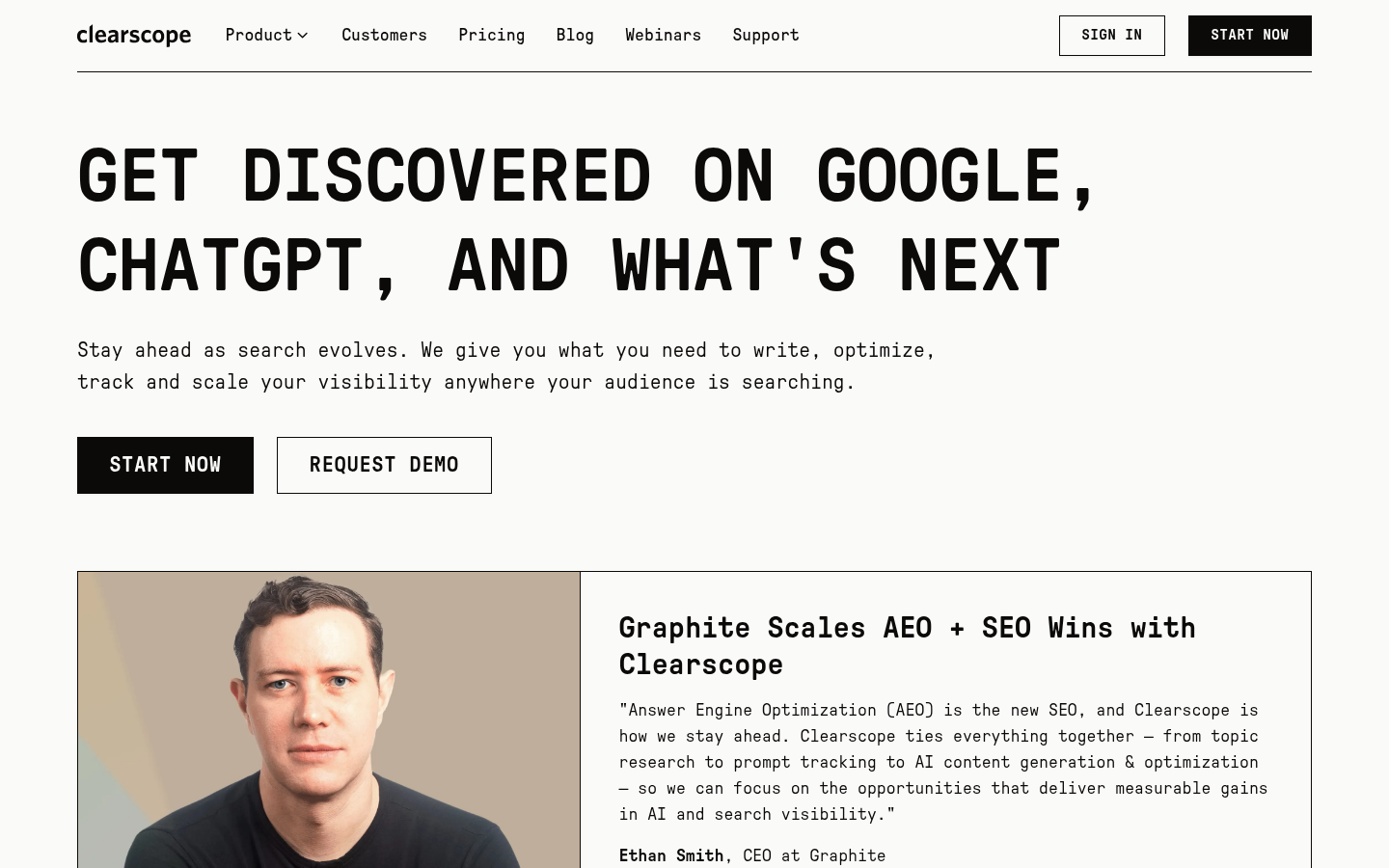
Clearscope's public homepage, captured in a logged-out desktop view on July 17, 2026. Source: [clearscope.io](https://www.clearscope.io/).
3. Surfer: best for a more active optimization editor
Surfer is a practical Frase.io alternative for writers who want frequent, visible direction while they draft. It gives the content editor a central role, which can speed up a repeatable process when briefs are stable and someone owns quality control.
The catch is that optimization feedback can become a proxy for editorial judgment. Do not ask a writer to hit a score by adding sections that do not serve the reader. Use the editor to catch coverage gaps, then edit for clarity, proof, and a real point of view.

Surfer's public homepage, captured in a logged-out desktop view on July 17, 2026. Source: [surferseo.com](https://surferseo.com/).
4. MarketMuse: best for topic authority planning on bigger sites
MarketMuse makes sense when the question is not "How do we improve this article?" but "Which collection of pages is incomplete, overlapping, or decaying?" Its planning orientation is useful for content teams with a substantial library and a need to prioritize refreshes.
It may be more system than a small team needs for a simple brief-and-draft workflow. If your editorial calendar is still managed in a single spreadsheet, get the process stable before paying for a sophisticated topic model.
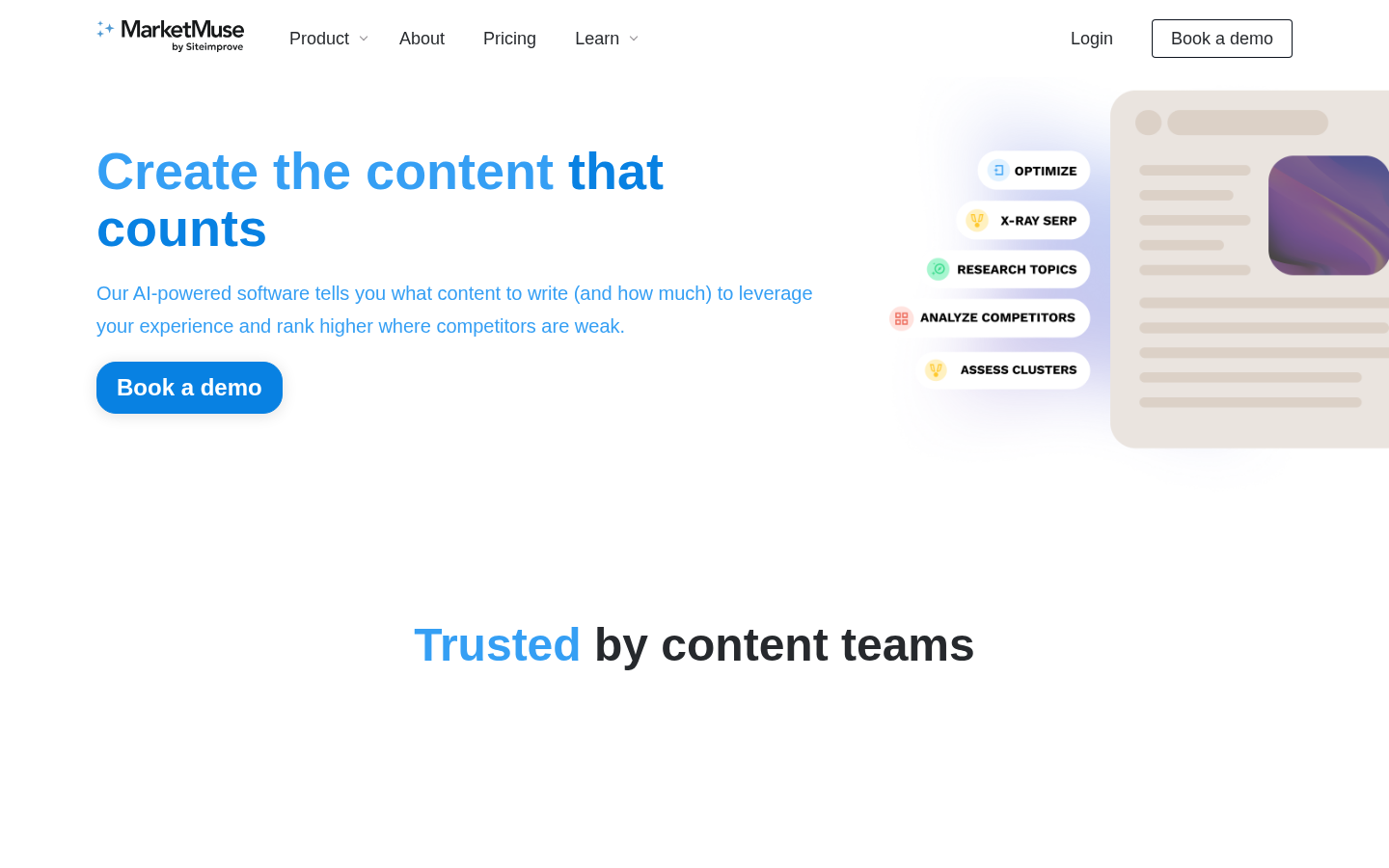
MarketMuse's public homepage, captured in a logged-out desktop view on July 17, 2026. Source: [marketmuse.com](https://www.marketmuse.com/).
5. Keyword Insights: best for clustering before writers start
Keyword Insights is a strong option when the expensive part of content production happens before the brief. It helps teams turn a keyword set into clusters and planned URLs, reducing the chance of five writers creating near-duplicate pages around the same intent.
This is a planning purchase, not an all-in-one content replacement. Pair it with an editor, a quality review process, and publishing controls. Its payoff comes from better decisions about what not to write.
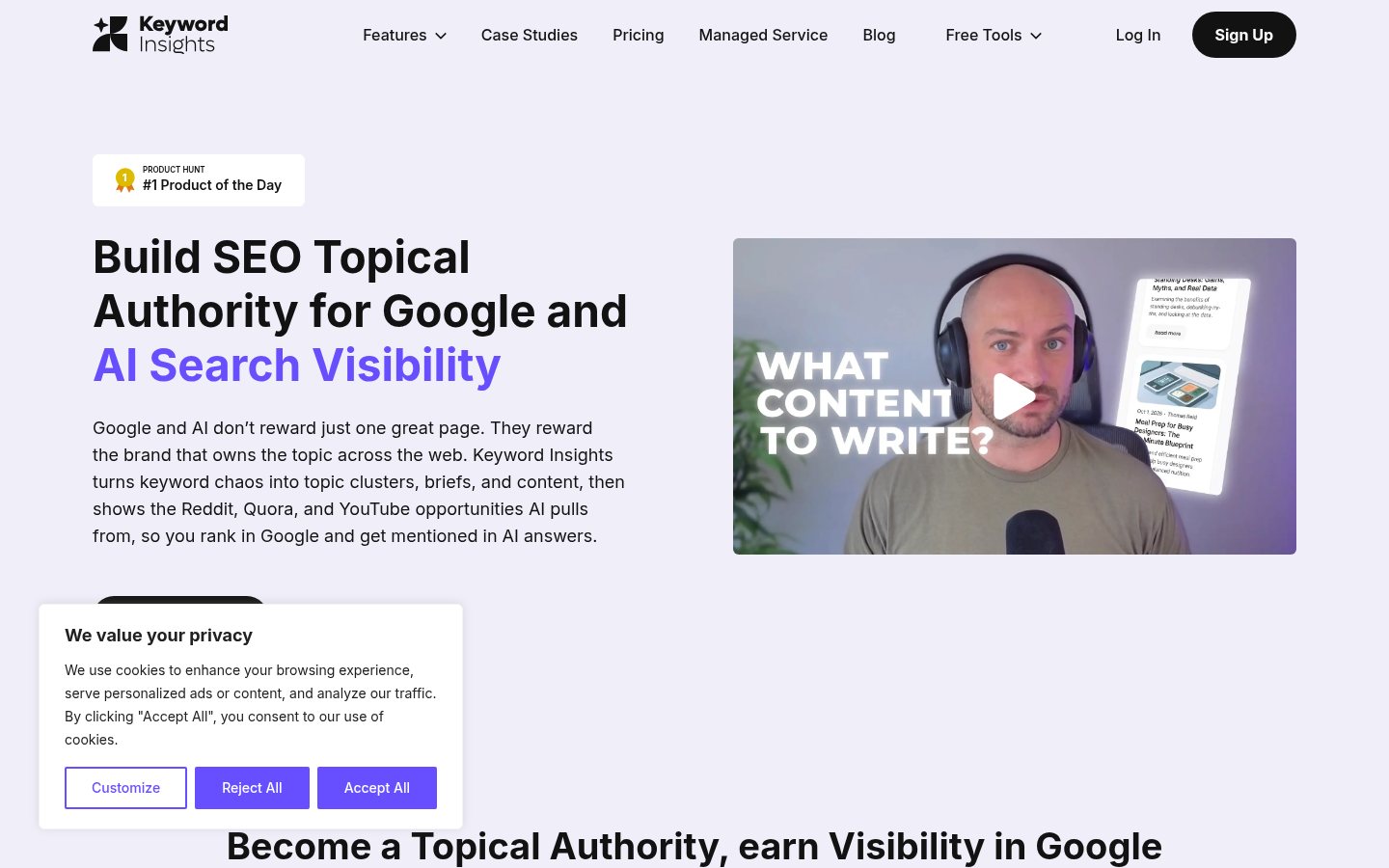
Keyword Insights' public homepage, captured in a logged-out desktop view on July 17, 2026. Source: [keywordinsights.ai](https://www.keywordinsights.ai/).
6. Semrush Content Toolkit: best when your research already lives in Semrush
For a team that already pays for Semrush data and uses its keyword, competitor, and site-audit reports, the Content Toolkit can reduce context switching. It is the most convenient Frase alternative when the content team wants briefs to remain close to the research environment.
Convenience is not the same as fit. Check which content capabilities are included in your plan and which require add-ons. Then test one live brief against your current workflow before moving the team.
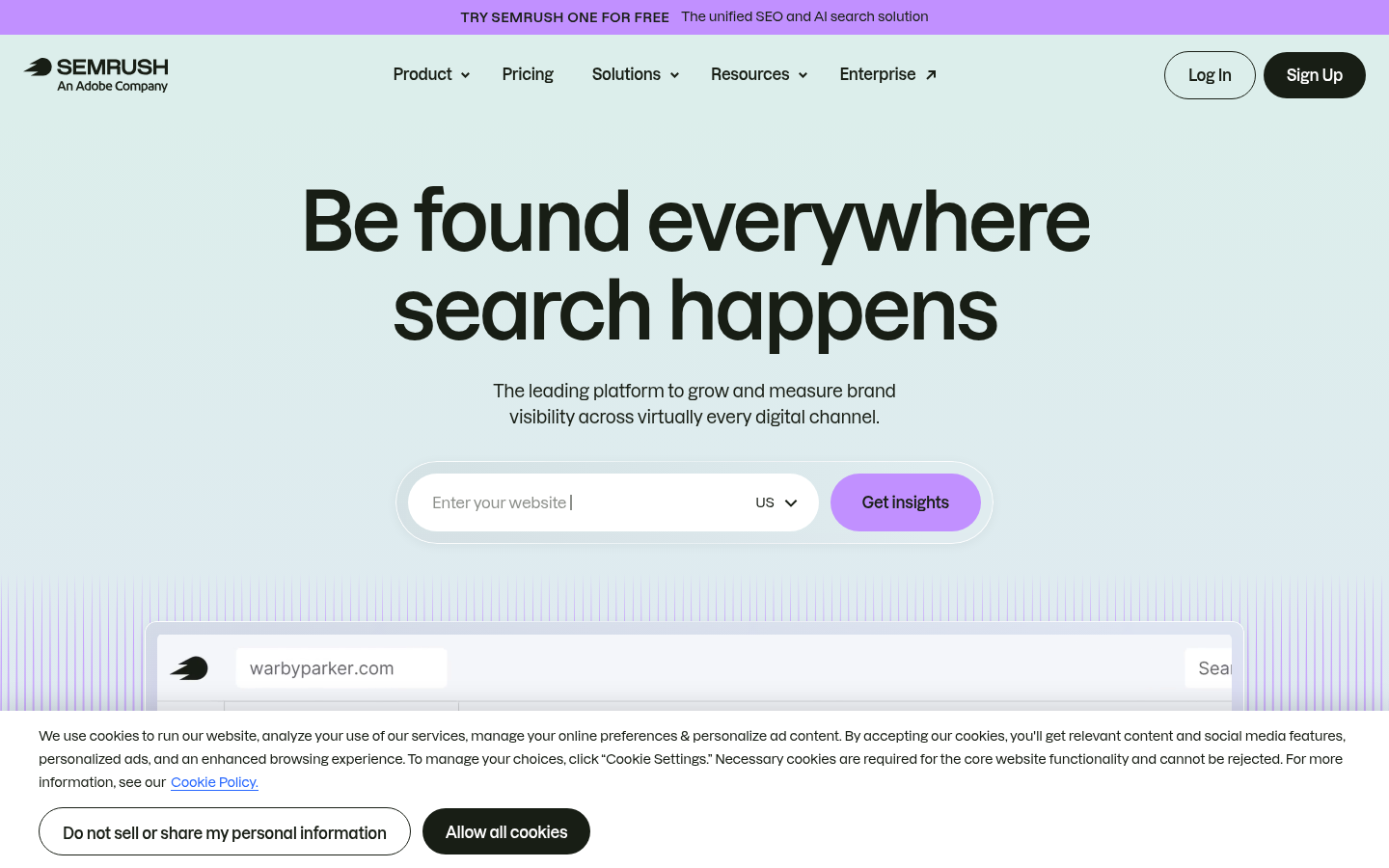
Semrush's public homepage, captured in a logged-out desktop view on July 17, 2026. Source: [semrush.com](https://www.semrush.com/).
7. Writer: best for governance-heavy organizations
Writer belongs on this list for teams whose real pain is control: approved terminology, product claims, style rules, legal review, and consistent language across a large organization. It can make a content process safer and more consistent.
It is not a direct replacement for Frase's SERP-first research workflow. Choose Writer to govern how approved content is produced, not to decide which topics a search team should target.
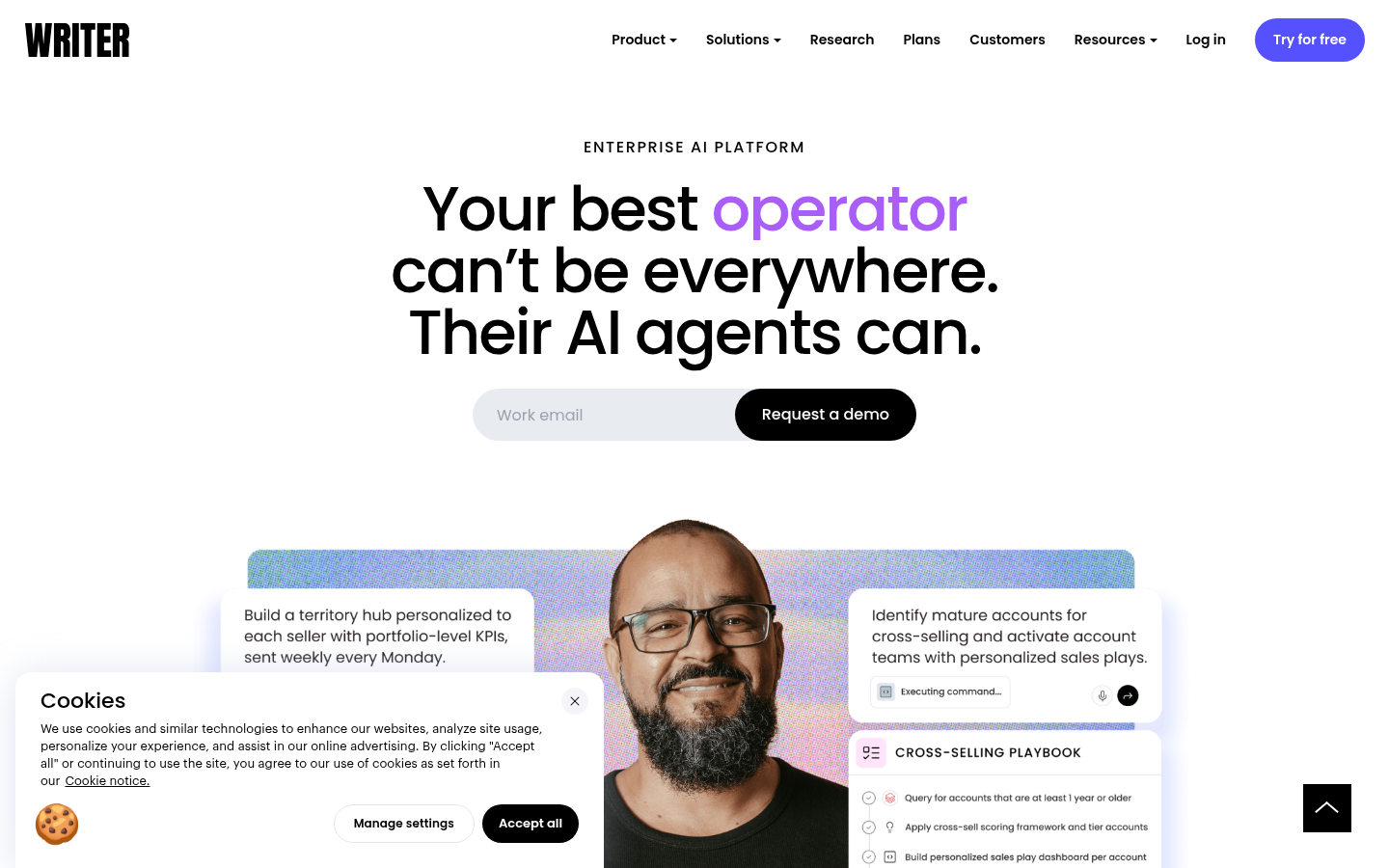
Writer's public homepage, captured in a logged-out desktop view on July 17, 2026. Source: [writer.com](https://writer.com/).
8. Jasper: best for multi-channel marketing production
Jasper works best when SEO articles are one output among many: landing-page variants, campaign copy, sales enablement, email, and social content. A marketing team can use it to keep a broader production system moving.
For a dedicated SEO team, it usually needs support from a research, optimization, and measurement layer. Treat it as a writing environment, not as a substitute for search-intent analysis.
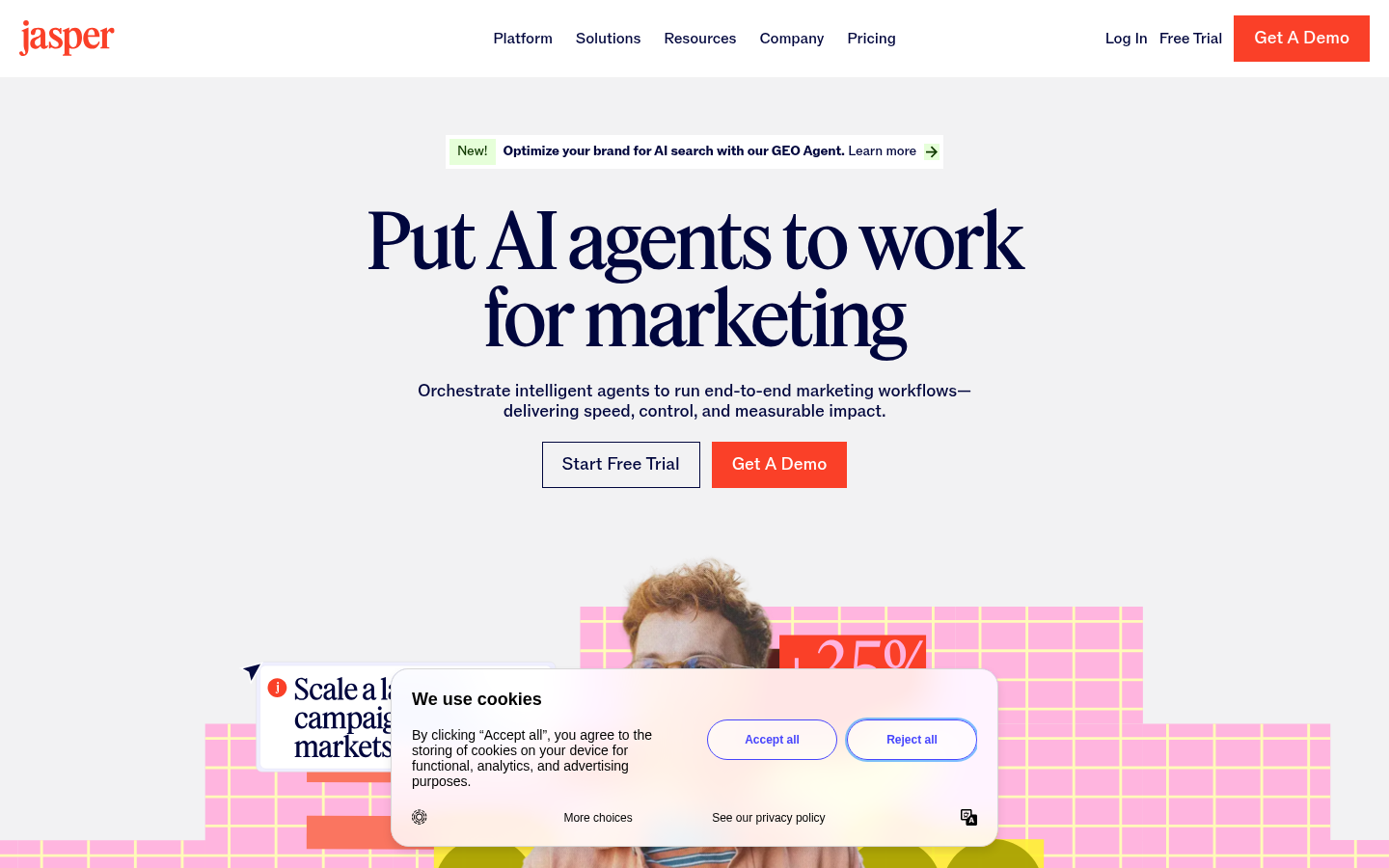
Jasper's public homepage, captured in a logged-out desktop view on July 17, 2026. Source: [jasper.ai](https://www.jasper.ai/).
A practical decision path
Use this sequence before booking demos or exporting existing projects.
- Name the broken handoff. Write one sentence such as: "Our briefs take three hours because SERP notes are manually copied" or "We publish pages but cannot tell whether the factual answers are clear enough for AI search." If the sentence is fuzzy, the purchase will be fuzzy too.
- Run one live query through two finalists. Use a real keyword with a page you intend to publish in the next two weeks. Do not use a friendly brand query or a demo brief.
- Score the output after human editing. Compare brief usefulness, source quality, outline quality, editing time, and the number of revisions required. A raw draft score is rarely the metric that matters.
- Check the operational cost. Ask who owns prompts, templates, integrations, approvals, and final publishing. The cheapest subscription becomes expensive when nobody owns the workflow.
- Decide what the tool will not do. It will not replace subject-matter review, fact checking, original examples, or a publishing standard. Put those boundaries in the trial plan.
A lightweight trial scorecard
Criterion | What good looks like | Weight for most teams |
|---|---|---|
Brief quality | A writer can begin without rebuilding the research | High |
Search-intent fit | The proposed page matches the query, not just a bag of terms | High |
Editorial control | Editors can reject weak recommendations without fighting the interface | High |
Workflow fit | The tool works with your approvals, CMS, and team roles | High |
Measurement | The team can see whether changes improved the intended outcome | Medium to high |
Price and limits | Usage, seats, credits, and add-ons are clear before rollout | High |
What most Frase comparison pages leave out
The usual comparison list focuses on feature grids and public starting prices. Those are useful, but the harder issue is whether the tool changes the quality of the final page.
For SEO, ask whether it helps a writer answer the query with enough specificity to earn a click and satisfy the reader. For AI search, ask a sharper question: can the page state its recommendation, conditions, facts, and evidence clearly enough that an answer engine can summarize it without distorting it?
That is why a phrase list is not a content strategy. The better replacement is the tool that helps your team make fewer vague pages, detect overlapping intent before publication, and review results after the page goes live. If you are building this type of workflow, Auspia's SEO and AI-search tools are worth evaluating alongside the content editors above.
Choose neither when the process is the real problem
Sometimes the right Frase alternative is no new subscription. If your team has no agreed audience, no query-to-page map, no editor with authority to reject weak drafts, and no definition of a successful page, another tool will simply make more content faster.
Fix the basics first:
- Define the purpose of each page before researching it.
- Keep one brief template that asks for audience, intent, evidence, claims that need verification, and a conversion path.
- Give an editor the authority to remove filler sections and unsupported claims.
- Review published pages against outcomes, not only internal content scores.
Then trial tools against that process. You will get a clearer answer and avoid rebuilding the workflow around a vendor's demo.
FAQ
What is the best Frase alternative?
There is no single best option. Clearscope is a strong fit for editorial optimization, Surfer for active in-editor guidance, MarketMuse for authority planning, Keyword Insights for clustering, and Auspia for teams that need SEO, content automation, and AI-search readiness in the same workflow.
Is Auspia cheaper than Frase?
Auspia starts at $49 per month. Frase's plans and limits can change, so compare current pricing, usage allowances, and the capabilities you actually need before deciding which is cheaper for your team.
Is Surfer SEO a good Frase alternative?
Yes, particularly for teams that want a more hands-on content editor. It is less suitable as a replacement if the core need is site-wide topic planning, content governance, or AI-search measurement.
Can I replace Frase with a general AI writer?
Usually not on its own. General AI writers can speed up drafting, but they do not automatically provide reliable search-intent analysis, SERP research, source review, content prioritization, or post-publication measurement.
What should I migrate before changing tools?
Keep your keyword-to-URL map, briefing template, style guide, approved claims, source standards, and performance baseline. Exporting old drafts matters less than preserving the operating decisions that made the good pages good.
Author: Alice Monroe, AI SEO Tools Analyst Covering 150+ Tools at Auspia. Alice writes about practical tool selection, workable content workflows, and the trade-offs hidden behind software feature lists.