What you get from this article
One Codex skill that turns a URL into a GEO Readiness score, plus the exact workflow for acting on it.
You get:
- A self-contained
codex-seo-geoskill with a zero-dependency scanner
(python3 only, nothing to install)
- A five-signal scoring model: citability 25%, structure 20%, authority 20%,
technical access 20%, multimodality 15%
- A real run on a live page (71/100) and a contrasting one (37/100), with
the output explained line by line
- The priority ladder: quick wins, medium effort, high impact
Definition of done: run one command, get a number and a fix list, and know why each deduction happened.
Why this is the same SEO you were already doing
Google put it plainly in its AI optimization guide: optimizing for generative AI search is still SEO from Google's perspective. GEO is a rebranding of the same work. That simplifies the mental model, but the surface changed. AI answers excerpt small self-contained blocks, they cite pages the way a researcher would, and they have their own reach and freshness rules.
A few numbers worth internalizing:
- 92% of AI Overview citations come from top-10 ranking pages — ranking
still feeds citations.
- But 47% come from pages ranking below position 5 — being the best answer
matters beyond raw rank.
- Content under 3 months old is ~3x more likely to be cited; 6+ months stale
loses citation eligibility (SE Ranking, 1.3M-citation study).
- AI crawlers do not execute JavaScript. A page that renders client-side is
invisible to most of them, whatever else it does well.
- Brand mentions correlate about 3x more strongly with AI visibility than
backlinks (Ahrefs, 75k brands).
The last two points are the ones most audits miss. This skill checks both.
The workflow, step by step
Treat this like a weekly review, not a one-off.
Step 1: Scan the page. Run the scanner on any URL and read the total. Scores fall in three bands: 0-50 means a structural problem (JS-rendered, no dates, no answer blocks), 50-80 means it's fixable in a couple of hours with the fix list, 80+ means you're doing most things right and should spend effort where the platform differences are (below).
Step 2: Read the evidence, not just the number. Every score prints the raw facts behind it: words found in raw HTML, page's target count, tables, lists, question-shaped headings, publication dates, crawler allow/block state. If structure reads 20/20, your hierarchy and FAQ are fine. If technical reads 10/20, the first line of the fix list should be "content may be JS-rendered."
Step 3: Fix in priority order. Quick wins first — they're 15 minutes each: a definition sentence in the front, one self-contained answer block of 134-167 words in the first third, show dates, allow the AI crawlers. Then the medium list: schema, author bio, SSR.
Step 4: Re-scan after a week. Recency is a live signal. Content older than 3 months loses citation eligibility; schedule a refresh date when you scan, then let the scan find the new month-old pages again.
Step 5: Treat platforms separately. Only 11% of domains get cited by both ChatGPT and Google AI Overviews for the same query. ChatGPT leans on Wikipedia (47.9%) and Reddit (11.3%); Perplexity leans on Reddit (46.7%). Web SEO gets you into AI Overviews. Entity and community work gets you into chat answers. They are different games; you can score both, but expect different entry tickets.
The five signals behind the score
The scanner can measure signals, not feelings. Here is what maps where.
Signal | Weight | What the scanner measures |
|---|---|---|
Citability | 25% | 134-167 word self-contained blocks (count in page + count in first 30%), "X is..." definition in first paragraphs, average paragraph length |
Structure | 20% | Single H1, H2/H3 counts, question-shaped H2s, tables, lists, FAQ section |
Authority | 20% | Author meta/byline, published + modified dates, source-attribution markers ("according to", "study", "statistics") |
Technical | 20% | Raw-HTML word count (SSR check), AI crawlers allowed vs blocked in robots.txt, /llms.txt presence |
Multimodal | 15% | Images, video embeds/links, JSON-LD blocks |
Two honest omissions: brand-mention analysis (Wikipedia, Reddit, YouTube) needs data the scanner cannot see, and per-platform citation checks (what ChatGPT actually answers) need a live engine. Both are covered in text below the score — the skill reports them as things to do, not things it measured.
The full SKILL.md
Save this as ~/.codex/skills/codex-seo-geo/SKILL.md:
---
name: codex-seo-geo
description: Use when the user asks about AI Overviews, SGE, GEO, AI search, LLM optimization, Perplexity citations, ChatGPT search citations, AI visibility, llms.txt, AI crawler robots.txt rules, or Generative Engine Optimization for a page or domain. Works with any site; python3 only.
---
# GEO Readiness Scan & Optimization

Optimize content for AI search surfaces: Google AI Overviews, AI Mode,
ChatGPT web search, Perplexity, Bing Copilot. Frame findings as SEO
fundamentals applied to AI-search surfaces, not a separate discipline.
When community recommendations contradict Google's primary source, defer to
Google and note the contradiction.

## Primary Source

Google's AI optimization guide (Search Central, May 2026): "Optimizing for
generative AI search is still SEO from Google's perspective. AEO and GEO are
rebranded labels for the same work." Also explicitly: `llms.txt` and other
AI-text files are not needed for Google Search and do not help or hurt
visibility or rankings. Never recommend `llms.txt` as a Google ranking or
citation lever; it may still serve non-Google systems.

## Run

```bash
python3 ~/.codex/skills/codex-seo-geo/scripts/geo_scan.py <url> [--json]
```

The scanner measures five signal groups and reports a 0-100 GEO Readiness
score plus the evidence behind every deduction and a prioritized fix list.
It also fetches robots.txt (AI crawler allow/block), `/llms.txt` presence,
and follows 307/308 redirects manually (Python < 3.11 urllib does not).

## The five signals

Weights come from the adapted claude-seo framework; the underlying
thresholds track Google's official guidance and published studies.

### 1. Citability (25%)

- **Optimal passage length: 134-167 words** for AI citation; self-contained
  blocks that extract without context.
- ~44% of AI citations come from the first 30% of a page (SE Ranking);
  front-load your best answer block.
- Direct answer in the first 40-60 words of a section; a definition in a
  "X is..." pattern near the top.
- Claims attributed with specific sources; unique data points.

### 2. Structure (20%)

- Clean H1->H2->H3 hierarchy; one H1.
- Question-shaped H2s match how AI answers queries.
- Short paragraphs (2-4 sentences), tables for comparative data, lists for
  multi-item content, FAQ section.

### 3. Multimodal (15%)

- Text + relevant images; embedded video; infographics;
  structured data supporting media (Article/Organization/Person).

### 4. Authority & brand (20%)

- Author byline with credentials; publication date AND last-updated date.
- Recency: content under 3 months old is ~3x more likely to be cited;
  6+ months stale loses citation eligibility (SE Ranking, 1.3M-citation
  study). A scheduled refresh program is a top GEO play.
- Citations to primary sources; entity presence on Wikipedia, Wikidata.
- Brand mentions correlate ~3x more strongly with AI visibility than
  backlinks (Ahrefs, 75,000 brands): YouTube ~0.737, Wikipedia/Reddit high,
  Domain Rating ~0.266.

### 5. Technical accessibility (20%)

- AI crawlers do NOT execute JavaScript: server-side rendering matters.
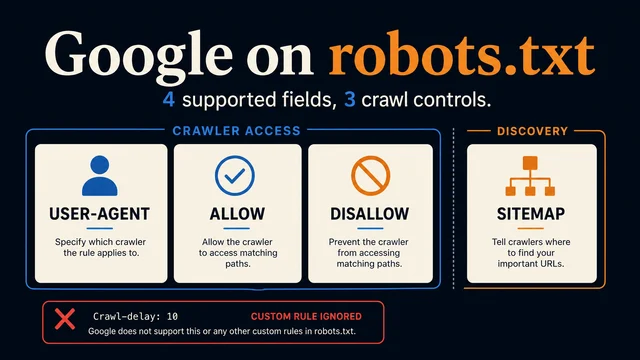
- robots.txt allows key AI crawlers (see table).
- `/llms.txt` present (record only; no citation weight).

## AI crawler table

| Crawler | Owner | Obeys robots.txt? | Recommend |
|---------|-------|-------------------|-----------|
| GPTBot / OAI-SearchBot | OpenAI | yes | allow (ChatGPT search) |
| ClaudeBot | Anthropic | yes | allow |
| PerplexityBot | Perplexity | yes | allow |
| Google-Extended | Google | yes | allow (or block to opt out of Gemini training) |
| Google-CloudVertexBot | Google | yes | allow |
| anthropic-ai | Anthropic | yes | optional (training) |
| CCBot | Common Crawl | yes | block if training out |
| Bytespider | ByteDance | yes | block if training out |
| cohere-ai | Cohere | yes | optional |
| ChatGPT-User | OpenAI | **no (user-triggered)** | cannot be blocked by robots.txt |
| Google-Agent | Google | **no (user-triggered)** | cannot be blocked by robots.txt |
| Google-NotebookLM | Google | **no (user-triggered)** | cannot be blocked by robots.txt |

User-triggered fetchers ignore robots.txt by design; server-side access
controls are the only protection. There is no AI-feature opt-out file;
AI Overviews / AI Mode appearance is governed by standard preview and
indexing directives (nosnippet, data-nosnippet, max-snippet, noindex).

## Platform differences

| Platform | Citation sources | Focus |
|----------|------------------|-------|
| Google AI Overviews | Strongly ranking-correlated | Traditional SEO + passages |
| Google AI Mode | Weakly ranking-correlated, broader pool (~9 domains/query) | Freshness, entity authority, citable passages beyond position 5 |
| ChatGPT | Wikipedia (47.9%), Reddit (11.3%) | Entity presence, authoritative sources |
| Perplexity | Reddit (46.7%), Wikipedia | Community validation |
| Bing Copilot | Bing index | Bing SEO, IndexNow |

Only 11% of domains are cited by both ChatGPT and Google AI Overviews for
the same query - optimize per platform. AI Overviews and AI Mode cite the
same URLs only 13.7% of the time (Ahrefs, 540k query pairs); score both.

## Scoring rules

| Signal | Score | Deducted when |
|--------|-------|---------------|
| Citability | 25 | no 134-167w block (-15/8), none in first 30% (-5), no definition (-5), avg paragraph >120w (-2) |
| Structure | 20 | no single H1 or no H2 (-5), no question H2 (-5), no tables/lists (-5), no FAQ with 10+ paragraphs (-5) |
| Multimodal | 15 | 0 images (-5), <3 images (-2), no video (-4), no JSON-LD (-3) |
| Authority | 20 | no byline (-6), no published date (-6), no modified (-2), <2 source references (-4) |
| Technical | 20 | no SSR content (<250 raw words, -10), blocked AI crawlers (-5) |

## Output contract

For analysis: a report with the score, the per-signal breakdown with
evidence, platform-specific notes, and the 5 highest-impact changes sorted
by effort. For a page the user owns, add a scheduled refresh date for
content older than 3 months.

## Priority ladder

Quick wins: "X is..." definition in first 60 words; one 134-167 word
answer block in the first 30%; question-shaped H2s; specific statistics with
sources; publication + update dates; Person schema; allow GPTBot,
OAI-SearchBot, ClaudeBot, PerplexityBot.

Medium: author bio with credentials; SSR for key content; brand presence on
Reddit/YouTube; comparison tables with data; FAQ sections.

High impact: original research or surveys; Wikipedia presence; YouTube
mentions; comprehensive sameAs entity linking; tools or calculators.

## Errors

| Scenario | Action |
|----------|--------|
| URL unreachable | Report status code; verify URL; do not guess content |
| 307/308 redirect | Followed automatically (up to 4 hops); report final URL |
| JS-rendered shell | Report the SSR failure; AI crawlers will see the shell too |
| Blocked AI crawlers | List blocked+allowed; give exact robots.txt directives to add |
| No llms.txt | Note absence; Google ignores it, template offered for other systems |
| No structured data | Recommend Article, Organization, Person JSON-LD |
The evidence collector
Save this as ~/.codex/skills/codex-seo-geo/scripts/geo_scan.py:
#!/usr/bin/env python3
"""GEO readiness scanner: measures the signals that drive AI citations -
structure, passage citability, authority, multimodal content and technical
accessibility - and reports a 0-100 score with the evidence behind it.
Standard library only. Usage:
  python3 geo_scan.py <url> [--json]
"""
import json
import re
import sys
import urllib.error
import urllib.parse
import urllib.request

TIMEOUT = 15
UA = ("Mozilla/5.0 (Macintosh; Intel Mac OS X 10_15_7) "
      "AppleWebKit/537.36 (KHTML, like Gecko) Chrome/126.0 Safari/537.36 "
      "codex-seo-geo/1.0")
AI_CRAWLERS = [
    "GPTBot", "OAI-SearchBot", "ClaudeBot", "PerplexityBot",
    "Google-Extended", "CCBot", "anthropic-ai", "Bytespider",
    "cohere-ai", "Google-CloudVertexBot",
]
DANGER = ("Google-Agent", "Google-NotebookLM", "Google-Agent",
          "Google Messages", "ChatGPT-User")


def fetch(url, timeout=TIMEOUT, hops=0):
    if not url.startswith("http"):
        url = "https://" + url
    req = urllib.request.Request(url, headers={"User-Agent": UA})
    try:
        resp = urllib.request.urlopen(req, timeout=timeout)
        return resp.status, resp.read(), resp.geturl()
    except urllib.error.HTTPError as e:
        # Python < 3.11 urllib does not follow 308; handle it manually
        loc = e.headers.get("Location") if e.code in (307, 308) else None
        if loc and hops < 4:
            return fetch(urllib.parse.urljoin(url, loc), timeout, hops + 1)
        return e.code, b"", url
    except Exception as e:
        return "ERR:" + str(e)[:80], b"", url


def clean_text(html):
    if isinstance(html, bytes):
        html = html.decode("utf-8", "replace")
    html = re.sub(r"<(script|style|noscript)[^>]*>.*?</\1>", " ", html,
                  flags=re.S | re.I)
    html = re.sub(r"", " ", html, flags=re.S)
    html = re.sub(r"<[^>]+>", " ", html)
    html = re.sub(r"&[a-z]+;|&#\d+;", " ", html)
    return re.sub(r"\s+", " ", html).strip()


def paragraphs(html):
    paras = re.findall(r"<p[^>]*>(.*?)</p>", html, re.S | re.I)
    out = []
    for p in paras:
        t = clean_text(p)
        if t:
            out.append(t)
    return out


def words(t):
    return len(t.split())


def main():
    url = sys.argv[1] if len(sys.argv) > 1 else ""
    if not url:
        print("usage: python3 geo_scan.py <url> [--json]")
        sys.exit(1)
    want_json = "--json" in sys.argv
    status, html, final = fetch(url)
    html = html.decode("utf-8", "replace")
    result = {"url": url, "status": status, "final_url": final}

    if status != 200:
        result["error"] = "fetch failed"
        print(json.dumps(result, default=str) if want_json else
              "GEO scan error: %s" % status)
        sys.exit(1)

    host = re.match(r"^(https?://[^/]+)", final)
    base = host.group(1) if host else final

    # --- technical accessibility (20) ---
    body = clean_text(html)
    total_words = words(body)
    # SSR check: real content in the raw HTML, not a JS shell
    n_h2 = len(re.findall(r"<h2[^>]*>", html, re.I))
    has_ssr = total_words >= 250
    # robots.txt AI crawlers
    r_status, r_body, _ = fetch(base + "/robots.txt")
    crawlers = {"allowed": [], "blocked": [], "absent": [], "user": []}
    if r_status == 200 and r_body:
        rtxt = r_body.decode("utf-8", "replace")
        for c in AI_CRAWLERS:
            dis = re.search(r"^User-agent:\s*%s\s*$.*?(?:^User-agent:|\Z)"
                            % re.escape(c), rtxt, re.S | re.I | re.M)
            if dis and "Disallow: /" in dis.group(0):
                crawlers["blocked"].append(c)
            elif dis:
                crawlers["allowed"].append(c)
            else:
                crawlers["absent"].append(c)
    lm_status, lm_body, _ = fetch(base + "/llms.txt")
    has_llms = lm_status == 200 and len(lm_body) > 20

    tech = {"has_ssr": has_ssr, "ssr_words": total_words,
            "crawlers": crawlers, "llms_txt": has_llms}
    tech_score = 20
    if not has_ssr:
        tech_score -= 10
    blocked = crawlers["blocked"]
    if blocked:
        tech_score -= 5
    result["technical"] = {"score": tech_score, "max": 20, **tech}

    # --- structural readability (20) ---
    h1 = len(re.findall(r"<h1[^>]*>", html, re.I))
    h2 = n_h2
    h3 = len(re.findall(r"<h3[^>]*>", html, re.I))
    q_h2 = 0
    for t in re.findall(r"<h2[^>]*>(.*?)</h2>", html, re.S | re.I):
        c = clean_text(t)
        if c and (c.endswith("?") or re.match(r"^(How|What|Why|When|Where|Who|Can|Is|Are)\b", c)):
            q_h2 += 1
    paras = paragraphs(html)
    n_tables = len(re.findall(r"<table[^>]*>", html, re.I))
    n_lists = len(re.findall(r"<ul[^>]*>|<ol[^>]*>", html, re.I))
    has_faq = bool(re.search(r"<h2[^>]*>[^<]*faq", html, re.I))
    struct = {"h1": h1, "h2": h2, "h3": h3, "question_h2": q_h2,
              "paragraphs": len(paras), "tables": n_tables,
              "lists": n_lists, "faq": has_faq}
    struct_score = 20
    if h1 != 1 or not h2:
        struct_score -= 5
    if q_h2 == 0 and h2 >= 6:
        struct_score -= 5
    if not (n_tables or n_lists):
        struct_score -= 5
    if not has_faq and len(paras) >= 10:
        struct_score -= 5
    result["structure"] = {"score": struct_score, "max": 20, **struct}

    # --- citability (25) ---
    # a self-contained answer block in the target band (134-167 words);
    # ~44% of AI citations come from the first 30% of a page
    total_chars = len(body)
    threshold = int(total_chars * 0.30)
    first_30 = []
    remaining = threshold
    for p in paras:
        if remaining <= 0:
            break
        first_30.append(p)
        remaining -= len(p) + 1
    bands = [[134, 167, "in-band"], [100, 133, "close"], [90, 300, "usable"]]
    in_band = sum(1 for p in paras if 134 <= words(p) <= 167)
    in_first = sum(1 for p in first_30 if 134 <= words(p) <= 167)
    define = 0
    for p in paras[:3]:
        if re.match(r"^(The |A |An )?[A-Z][a-zA-Z0-9' -]+ is (a|an|the|a way|a process|the process|software|tool|platform)\b", p):
            define += 1
    avg_para = round(sum(map(words, paras)) / len(paras)) if paras else 0
    cit = {"in_band_blocks": in_band, "in_first_30pct": in_first,
           "definition_head": define, "avg_para_words": avg_para,
           "front_answer_note": None}
    cit_score = 25
    if in_band >= 3:
        pass
    elif in_band >= 1:
        cit_score -= 8
    else:
        cit_score -= 15
    if in_first == 0 and in_band == 0:
        cit_score -= 5
    if define == 0:
        cit_score -= 5
    if avg_para > 120:
        cit_score -= 2
    result["citability"] = {"score": max(cit_score, 0), "max": 25, **cit}

    # --- authority (20) ---
    author = re.search(r'<meta[^>]+name=["\']author["\'][^>]+content=["\']([^"\']+)',
                       html, re.I)
    byline = re.search(r'(?:by\s+[A-Z][a-z]+\s+[A-Z][a-z]+)', body)
    pub = re.search(r'<meta[^>]+(?:property|name)=["\']'
                    r'(?:article:published_time|datePublished|date)["\'][^>]+'
                    r'content=["\']([^"\']+)', html, re.I)
    mod = re.search(r'<meta[^>]+(?:property|name)=["\']'
                    r'(?:article:modified_time|dateModified)["\'][^>]+'
                    r'content=["\']([^"\']+)', html, re.I)
    quote_sources = body.count("according to") + body.count("source:") + \
        body.count("study") + body.count("statistics")
    auth = {"author_meta": author.group(1) if author else None,
            "byline_found": bool(byline),
            "published": pub.group(1) if pub else None,
            "modified": mod.group(1) if mod else None,
            "source_hits": quote_sources}
    auth_score = 20
    if not (author and author.group(1)) and not byline:
        auth_score -= 6
    if not (pub and pub.group(1)):
        auth_score -= 6
    elif not (mod and mod.group(1)):
        auth_score -= 2
    if quote_sources < 2:
        auth_score -= 4
    result["authority"] = {"score": max(auth_score, 0), "max": 20, **auth}

    # --- multimodal (15) ---
    n_img = len(re.findall(r"<img[^>]*>", html, re.I))
    n_vid = len(re.findall(r"<video[^>]*>|youtube\.com|youtu\.be", html, re.I))
    n_schema = len(re.findall(r'application/ld\+json', html, re.I))
    multi = {"images": n_img, "video_embeds": n_vid, "schema_blocks": n_schema}
    multi_score = 15
    if n_img == 0:
        multi_score -= 5
    if n_img < 3:
        multi_score -= 2
    if n_vid == 0:
        multi_score -= 4
    if n_schema == 0:
        multi_score -= 3
    result["multimodal"] = {"score": max(multi_score, 0), "max": 15, **multi}

    total = (result["technical"]["score"] + result["structure"]["score"] +
             result["citability"]["score"] + result["authority"]["score"] +
             result["multimodal"]["score"])
    result["total"] = total

    if want_json:
        print(json.dumps(result, default=str, indent=2))
        return

    print("GEO readiness %s" % final)
    print("  total: %d/100" % total)
    print("  technical: %d/20  SSR:%s words=%d llms.txt:%s blocked=%s" % (
        result["technical"]["score"], has_ssr, total_words, has_llms, blocked))
    print("  structure: %d/20  h1=%d h2=%d h3=%d question-h2=%d tables=%d lists=%d faq=%s" % (
        result["structure"]["score"], h1, h2, h3, q_h2, n_tables, n_lists, has_faq))
    print("  citability: %d/25  134-167w blocks=%d in-first-30%%=%d definition=%d avg-para=%dw" % (
        result["citability"]["score"], in_band, in_first, define, avg_para))
    print("  authority: %d/20  author=%s published=%s modified=%s source-hits=%d" % (
        result["authority"]["score"],
        bool(author and author.group(1)), bool(pub and pub.group(1)),
        bool(mod and mod.group(1)), quote_sources))
    print("  multimodal: %d/15  images=%d video=%d schema=%d" % (
        result["multimodal"]["score"], n_img, n_vid, n_schema))
    print("  top fixes:")
    if not has_ssr:
        print("    - content may be JS-rendered; AI crawlers do not execute JS")
    if blocked:
        print("    - allow AI crawlers in robots.txt: %s" % ", ".join(blocked))
    if in_band == 0:
        print("    - add self-contained answer blocks of 134-167 words")
    if in_first == 0:
        print("    - move your best answer block into the first 30% of the page")
    if q_h2 == 0 and h2 >= 6:
        print("    - use question-shaped H2s to match how AI answers queries")
    if not (pub and pub.group(1)):
        print("    - add publication date (and ideally last modified)")
    if n_schema == 0:
        print("    - add Article/Organization/Person structured data")
    if not has_llms:
        print("    - llms.txt missing (optional: ignored by Google Search, may help other systems)")


if __name__ == "__main__":
    main()
Install it in three commands
mkdir -p ~/.codex/skills/codex-seo-geo/scripts
# save the two files above at:
#   ~/.codex/skills/codex-seo-geo/SKILL.md
#   ~/.codex/skills/codex-seo-geo/scripts/geo_scan.py
python3 ~/.codex/skills/codex-seo-geo/scripts/geo_scan.py https://example.com
The last command is your sanity check. You should see a GEO readiness header and a total. If the site is live but you get GEO scan error: 404 or a number near 0 with a JS-rendered warning, that is the scanner working.
A real run, and how to read it
A freshly published article on auspia.ai:
GEO readiness https://auspia.ai/blog/codex-seo-sitemap
  total: 71/100
  technical: 20/20  SSR:True words=4880 llms.txt:True blocked=[]
  structure: 20/20  h1=1 h2=30 h3=0 question-h2=10 tables=4 lists=13 faq=True
  citability: 0/25  134-167w blocks=0 in-first-30%=0 definition=0 avg-para=30w
  authority: 16/20  author=False published=True modified=True source-hits=1
  multimodal: 15/15  images=16 video=1 schema=1
  top fixes:
    - add self-contained answer blocks of 134-167 words
    - move your best answer block into the first 30% of the page
Read it the way the scorer does:
- 71/100 total. The page is server-rendered (4,880 words in raw HTML),
well structured, dated, multimodal. This is the band where fixable-in- an-hour lives.
- Citability 0/25 is the interesting number. The page uses an average
paragraph of 30 words — good for humans, wrong shape for AI extraction. Nothing in the first third of the document is a self-contained answer block in the 134-167 word band. That is exactly the fix: one block, placed early, written so it survives being quoted alone.
- author=False on authority: the page credits "Author: Daniel Cross" in
its body, but there is no author meta tag and no "by ..." line, which is what the scanner looks for. Credit exists for humans; the machine reads only the tag. Adding the meta is a ten-second server-side fix and a real citation signal.
- images=16 looks odd for one blog post: the count includes nav, footer,
and recommended-post thumbnails. Page-level multimodal is what AI crawlers see, so the count stays.
The contrast case, a JS-rendered search product homepage (felo.ai, which redirected to /search):
GEO readiness https://felo.ai/search
  total: 37/100
  technical: 10/20  SSR:False words=43 llms.txt:False blocked=[]
  structure: 10/20  h1=1 h2=0 h3=0 question-h2=0 tables=0 lists=0 faq=False
  citability: 0/25  134-167w blocks=0 in-first-30%=0 definition=0 avg-para=18w
  authority: 4/20  author=False published=False modified=False source-hits=0
  multimodal: 13/15  images=2 video=3 schema=1
  top fixes:
    - content may be JS-rendered; AI crawlers do not execute JS
    - add self-contained answer blocks of 134-167 words
43 words of content in the raw HTML. This is not a content problem; it is a rendering problem, and the fix list says so in the first line. A content team can write all day into a client-rendered page and the AI crawler still sees this.
Troubleshooting
Scenario | What you will see | Fix |
|---|---|---|
URL is a site root that redirects |
| Check the final URL; the score is for the landing page, not the bare domain |
308/307 loops | Scan ends after 4 hops with a status code | Report the loop; the site has a redirect misconfiguration |
Rate limited |
| Wait and retry; the scanner does not retry |
Windows, no python3 |
| Use |
Page behind login | 401/403 status line | Provide a public URL; crawlers cannot log in either |
0/25 citability but you wrote good content | avg paragraph length is short | That is the real signal: short tidy paragraphs do not extract. One longer self-contained block fixes it |
Paste this article into Codex
Copy everything from the line "~~~" before "## The full SKILL.md" through the end of the python code block (or the whole article; the skill reads it plus your prompt). In a Codex session, paste:
Read the two code blocks in the article above. Create
~/.codex/skills/codex-seo-geo/SKILL.md and
~/.codex/skills/codex-seo-geo/scripts/geo_scan.py from them exactly.
Then run python3 ~/.codex/skills/codex-seo-geo/scripts/geo_scan.py
https://example.com and report the output, plus what the three biggest
deductions mean for that site.
Codex will create the files, run the scanner, and explain the score. When you ask a real question later ("do we block PerplexityBot?", "is our blog citation-ready?"), the skill loads automatically via its description.
FAQ
Is llms.txt worth making? Google says it does not help or hurt Search (or AI Overviews). It may help non-Google systems. The scanner records presence, the skill never recommends it as a citation lever.
Why is my score low if my page ranks? Ranking and citability are different things. A rank 6 page that is the best self-contained answer still beats a rank 1 page that is walls of short paragraphs — 47% of citations come from pages below position 5.
Do I need to target ChatGPT and Google separately? Only 11% of domains are cited by both for the same query. Web SEO gets you in to Google's engines; Wikipedia/Reddit entity presence gets you in to chat answers.
Does fresh content really matter that much? Under 3 months old is ~3x more likely to be cited; past 6 months, citation eligibility drops off. That is why the skill adds a refresh date to its report.
My page is fine but Google AI Overviews won't show it. AI crawlers see what JavaScript output leaves behind. Check the words= figure: if the raw HTML contains 43 words of a 400-word post, you are not writing content problems, you have a rendering problem.
Next in the series (post 09 of 20): [How to Diagnose a Backlink Profile with Codex (Full SKILL.md Included)](https://auspia.ai/blog/codex-seo-backlinks) - backlink profile analysis with free sources.
Previous in the series: How to Set Up Codex for XML Sitemap Checks (Full SKILL.md Included). The full series roadmap lists all 20 posts.
Author: Maya Ellison, 12-Year GEO Strategy Researcher at Auspia. Maya writes about AI search visibility, brand entity clarity, and practical GEO systems for growth teams.
Based on the open-source claude-seo project by AgriciDaniel (MIT license, GitHub). This series adapts it for the Codex runtime: rewritten methodology, a Codex-native SKILL.md, and new evidence collectors written from scratch for this series.