The field note
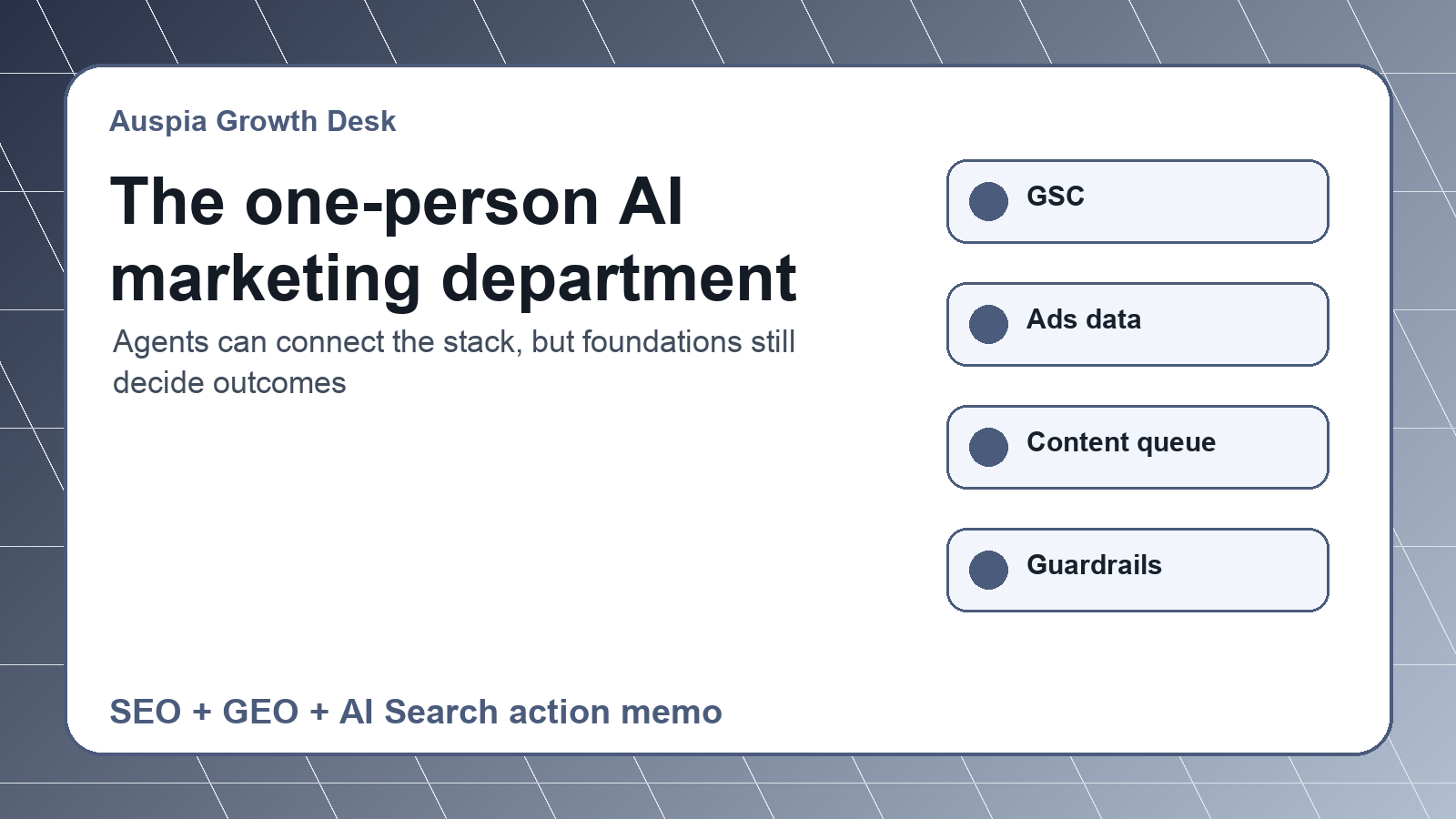
A marketer on X showed a workflow that looked like a one-person AI marketing department: Claude Code, MCP connectors, Search Console, Google Ads, Meta Ads, and an agent that could inspect data and suggest fixes.
That is not science fiction anymore. Claude Code can connect to external tools through the Model Context Protocol, and the market already has MCP servers for ad platforms, analytics, and search data. The more interesting question is not whether this can be built. It is whether most teams are ready to trust the output.
Most are not. Not yet.
What made it noticeable
The workflow is powerful because it connects data that usually lives in separate tabs.
Search Console can show query and page decay. Google Ads can show wasted spend and converting terms. Meta Ads can show creative fatigue. Analytics can show landing page behavior. A coding agent can turn those signals into briefs, tickets, scripts, and page changes.
That is a real operating shift. The marketer is no longer asking a chatbot for generic advice. The marketer is giving an agent a live context window into the growth stack.
The missing foundation
Here is the uncomfortable part: connecting the tools does not fix a messy system.
If your Search Console properties are incomplete, your campaigns have poor naming, your landing pages lack clear ownership, and your content has no topic map, the agent will inherit the mess. It may summarize the mess beautifully. It may even automate it.
The foundation still matters:
- Clean data sources with clear access boundaries.
- Read-only default permissions for analysis agents.
- A taxonomy for pages, campaigns, audiences, and funnel stages.
- A human approval gate before publishing, pausing, bidding, or rewriting.
- A measurement loop that checks whether the recommendation worked.
An agent can accelerate a good process. It can also accelerate a bad one.
A safer operating model
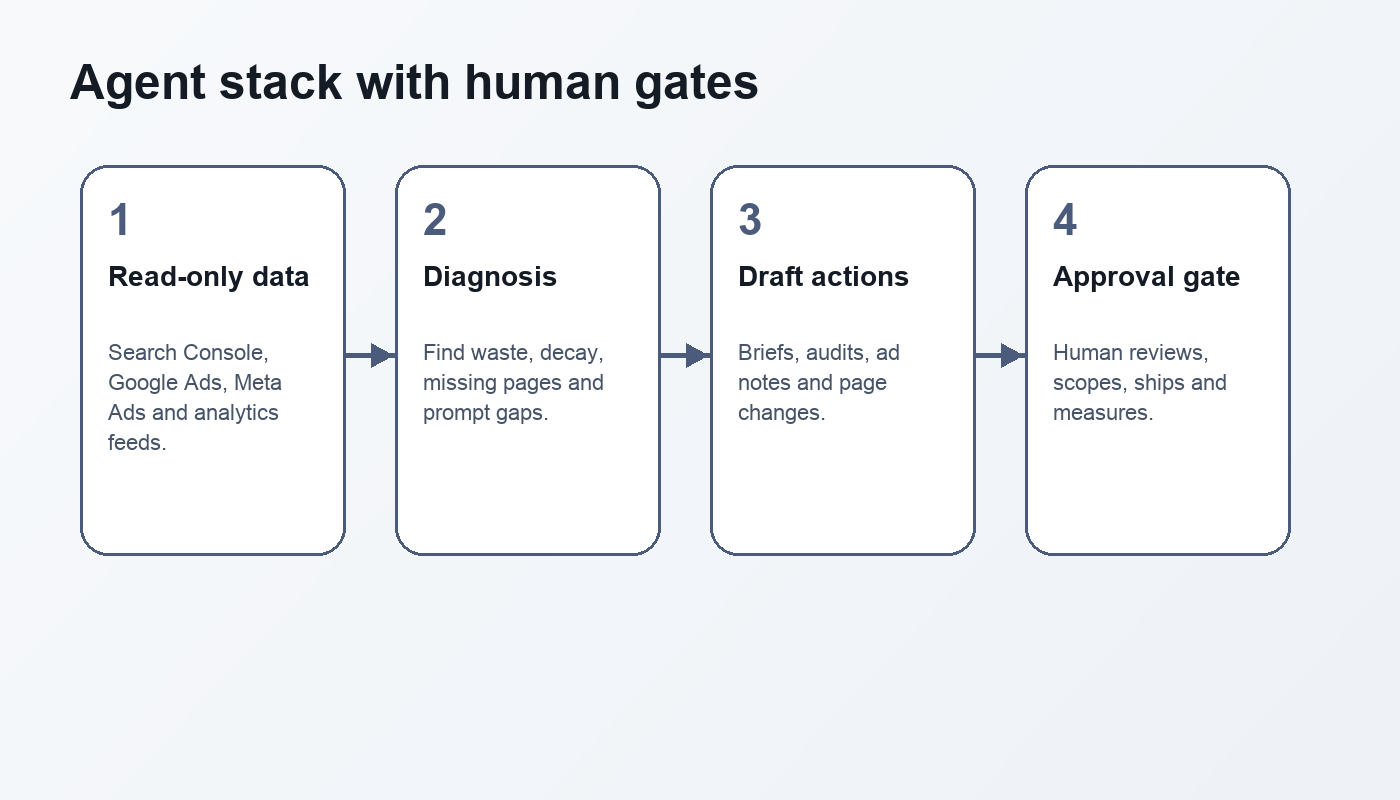
Start with diagnosis, not execution.
Stage | Agent can do | Human should approve | Risk |
|---|---|---|---|
Observe | Pull reports and identify anomalies | Data sources and time windows | Low |
Diagnose | Explain likely causes and affected pages | Priority and business context | Medium |
Draft | Create briefs, ad notes, and SEO tickets | Final scope and owners | Medium |
Execute | Edit pages or campaign settings | Every production change | High |
Measure | Compare before and after metrics | Interpretation and next action | Medium |
The first production version of an AI marketing department should be a read-only analyst and brief generator. Let it find problems. Let humans decide what ships.
Where this helps SEO and GEO first
The most useful first workflows are boring.
- Find pages with rising impressions and falling CTR.
- Match ad search terms to missing organic pages.
- Identify pages that rank but are not citation-ready for AI answers.
- Compare competitor mentions in AI answers against your own brand mentions.
- Create weekly repair briefs for the highest-value pages.
These tasks are repetitive, data-heavy, and annoying. Perfect agent territory.
The Auspia view
The AI marketing department is real enough to test now. But small teams should not skip the SEO and GEO basics.
Before connecting agents to every tool, make sure the website has clean technical signals, clear brand facts, extractable answers, and a content map. Otherwise the agent will spend its time discovering problems that should have been fixed months ago.
A better first project: connect Search Console, crawl data, and AI visibility prompts. Have the agent create a weekly "repair queue" with page, query, issue, suggested fix, and expected measurement.
FAQ
What is MCP in this context?
MCP stands for Model Context Protocol. It lets AI tools connect to external systems such as databases, APIs, analytics platforms, and workflow tools through standardized servers.
Should agents be allowed to change ad campaigns automatically?
Not at first. Start with read-only analysis and human-approved recommendations. Production changes need guardrails, logs, and rollback plans.
What is the easiest SEO workflow to automate?
Weekly page decay review is a good start. Pull pages with declining clicks or CTR, diagnose likely causes, and create scoped refresh briefs.
Does this replace a marketing team?
No. It replaces some manual reporting and first-draft analysis. Strategy, prioritization, brand judgment, and final approval still need humans.
Sources
- Claude Code documentation on MCP: https://code.claude.com/docs/en/mcp
- Example Google Ads MCP project: https://github.com/cohnen/mcp-google-ads
- Example ad-platform MCP discussion: https://mcp-ads.com/
- Nyra X workflow reference: https://x.com/Nyra_nx
Author: Nathan Reed, AI Marketing Workflow Designer for 80+ Growth Systems at Auspia. Nathan writes about AI-assisted marketing operations, guardrails, and practical growth workflows.