त्वरित उत्तर
SEO, यानी search engine optimization, वह काम है जिससे कोई page search engines के लिए crawl करना, समझना, भरोसा करना और उन queries पर rank करना आसान हो जाता है जिन्हें आपके buyers सच में इस्तेमाल करते हैं। 2026 में इसका मतलब अब भी content, technical health और authority है। फर्क यह है कि search अब सिर्फ blue links की list नहीं रह गई है। Google AI Overviews, Bing Copilot, Perplexity, ChatGPT Search और Gemini user के किसी भी चीज़ पर click करने से पहले answer summarize कर सकते हैं।
इससे SEO का काम बदल जाता है। एक modern SEO program को एक साथ दो moments जीतने होते हैं: traditional ranking moment, जहां page click कमाता है, और AI citation moment, जहां page किसी answer के अंदर source बन जाता है।
अगर एक बात याद रखनी हो, तो यह रखें: SEO मरा नहीं है, लेकिन thin SEO मर चुका है। जो pages सिर्फ keyword density, generic summaries और recycled advice पर बने हैं, उन्हें ignore करना आसान होता जा रहा है। जिन pages में clear answers, crawlable structure, named evidence, useful examples और visible trust signals हैं, उन्हें Google Search और AI answer systems दोनों में बेहतर मौका मिलता है।
2026 में SEO का मतलब क्या है
Search engine optimization search results में unpaid visibility सुधारने की system है। यह उन decisions को cover करता है जो search engine को चार basic questions के जवाब देने में मदद करते हैं:
Search engine question | आपकी site को क्या साबित करना होगा |
|---|---|
क्या हम इस पेज तक पहुंच सकते हैं? | पेज crawl किया जा सकता है, index किया जा सकता है, तेज है और तकनीकी नियमों से blocked नहीं है। |
यह किस बारे में है? | Title, headings, copy, schema, internal links और surrounding site context आपस में consistent हैं। |
क्या यह इस query के लिए useful है? | Page competing pages की तुलना में intent को बेहतर answer करता है। |
क्या हम इस पर trust कर सकते हैं? | Site experience, sources, authorship, brand credibility और third-party signals दिखाती है। |
Definition simple है। काम simple नहीं है। SEO content planning, site architecture, engineering, analytics, digital PR, product marketing और conversion को छूता है। यही वजह है कि teams अक्सर frustrate होती हैं। वे SEO को publishing checklist की तरह treat करती हैं, जबकि असल में यह distribution system है।
तीन pillars जो अभी भी मायने रखते हैं
अधिकतर SEO work अभी भी तीन pillars में फिट होता है: content, technical SEO और authority। Labels पुराने हैं, लेकिन अभी भी useful हैं क्योंकि हर pillar एक अलग failure mode से जुड़ा है।
Content SEO: real intent से match करना
Content SEO query से शुरू होता है, लेकिन वहीं रुक नहीं सकता। “agencies के लिए best CRM” जैसा keyword सिर्फ phrase नहीं है। इसमें budget, team size, integrations, migration pain, sales process और comparison criteria जैसी assumptions छिपी होती हैं।
अच्छा content SEO पहले मुख्य सवाल का जवाब देता है, फिर उन आगे आने वाले सवालों को भी संभालता है जो वरना पाठक को वापस search पर भेज देते। आमतौर पर इसका मतलब है:
- Topics को actual demand से चुनना, internal slogans से नहीं।
- Informational, commercial, navigational और transactional intent को अलग करना।
- ऐसे headings लिखना जो लोगों के पूछे जाने वाले questions से match करें।
- Filler के बजाय examples, tables, checklists और decision criteria इस्तेमाल करना।
- Related pages को link करना ताकि search engines topic cluster समझ सकें।
यहीं बहुत सी teams अभी भी हारती हैं। वे 2,000-word article publish करती हैं जो first page की बाकी pages जैसा ही कुछ कहता है। वह grammatically ठीक हो सकता है। शायद optimized भी हो। लेकिन वह कुछ नया नहीं जोड़ता।
Technical SEO: crawlers और users की friction हटाना
Technical SEO वह हिस्सा है जिसे सब ठीक होने पर कोई notice नहीं करता। Search engines को pages discover करने, render करने, canonical versions समझने और quality evaluate करने के लिए enough content load करने की जरूरत होती है। Users को भी वही pages fast और usable लगने चाहिए।
Basics में शामिल हैं:
- Clean URL structure और internal linking।
- XML sitemaps और correctly configured robots.txt file।
- Canonical tags जो duplicate-content confusion रोकते हैं।
- Mobile-friendly layouts।
- Core Web Vitals, खासकर LCP, INP और CLS।
- Structured data जहां वह सच में page clarify करे।
- Server responses, redirects और pagination जो predictably behave करें।
Technical SEO weak content को rescue नहीं करेगा। लेकिन weak technical foundations strong content को bury कर सकते हैं। अगर Googlebot या AI crawler page को cleanly access नहीं कर सकता, तो argument कभी सुना ही नहीं जाता।
AI-era auditing के लिए classic crawlability और AI crawler access दोनों check करना worth it है। Auspia का robots.txt AI crawler checker teams को यह spot करने में मदद कर सकता है कि GPTBot, Google-Extended या PerplexityBot जैसे bots को expected से अलग treat किया जा रहा है या नहीं।
Authority SEO: trust के reasons कमाना
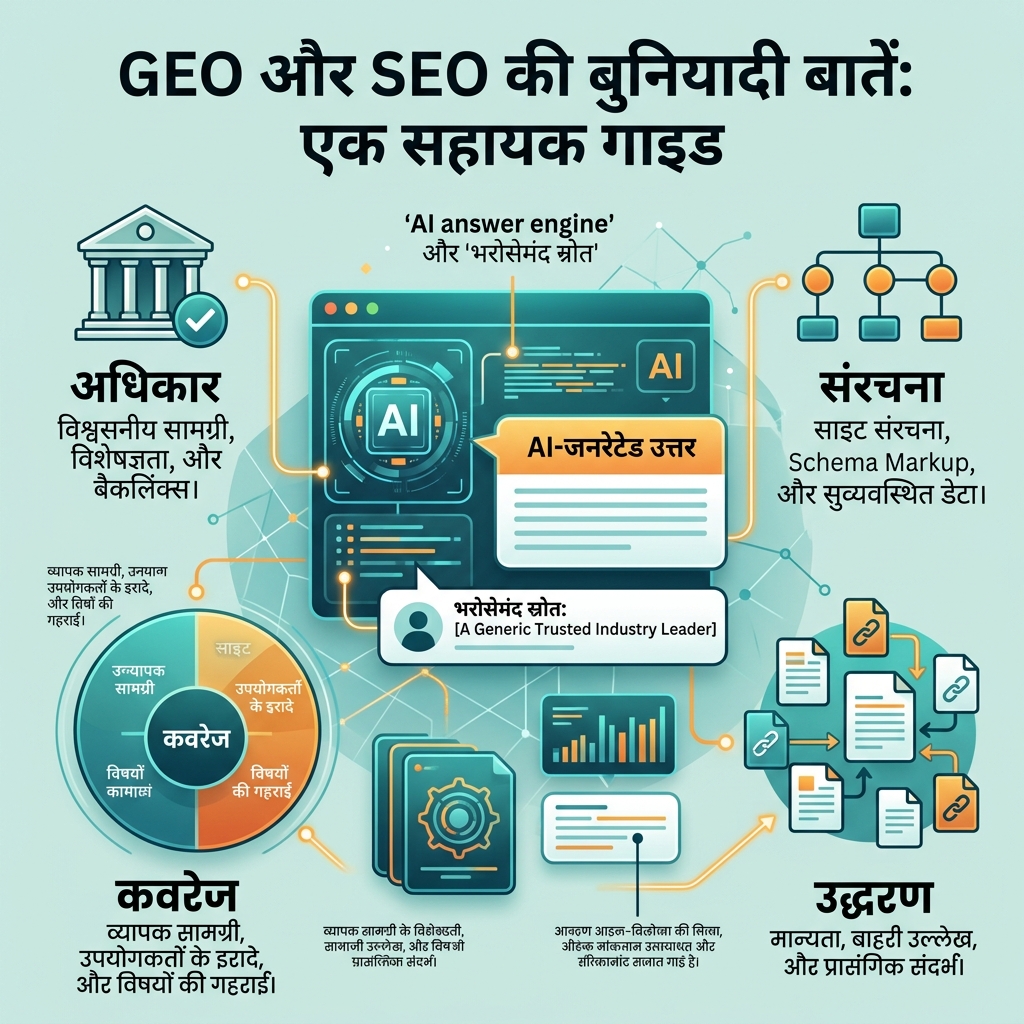
Authority सिर्फ backlinks नहीं है, हालांकि backlinks अभी भी matter करते हैं। Search engines और AI systems दोनों ऐसे signals देखते हैं जिनसे पता चले कि कोई source rely करने लायक है। इन signals में links, brand mentions, author reputation, original data, trusted websites से citations, consistent entity information और site-wide topical depth शामिल हो सकते हैं।
Best authority work अक्सर अच्छे अर्थ में boring होता है। कुछ ऐसा publish करें जिसे reference करना worth it हो। उसे cite करना आसान बनाएं। उन places के साथ relationships बनाएं जिन पर आपकी audience पहले से trust करती है। Brand और author information consistent रखें।
Random links खरीदना या low-quality guest posts chase करना कुछ समय तक movement बना सकता है, लेकिन यह fragile strategy है। AI search में, जहां answers अक्सर कई sources को एक summary में compress करते हैं, weak authority छिपाना और मुश्किल हो जाता है।

व्यावहारिक SEO और GEO कार्यप्रवाह खोज उद्देश्य से शुरू होता है, फिर पेज को ऐसी सामग्री बनाता है जिसे सर्च इंजन और AI जवाब प्रणालियां आसानी से पढ़ सकें, भरोसेमंद मान सकें और माप सकें।
सर्च इंजन पेज को कैसे समझते और क्रम देते हैं
पारंपरिक खोज में तीन बड़े चरण होते हैं: क्रॉलिंग, इंडेक्सिंग और रैंकिंग।
क्रॉलिंग खोज की प्रक्रिया है। बॉट URL को लिंक, साइटमैप, फीड और पिछली क्रॉल हिस्ट्री से ढूंढते हैं। अगर पेज ब्लॉक हो, बहुत अंदर दबा हो या अलग-थलग हो, तो वह प्रतिस्पर्धा करने लायक बार-बार दिखाई नहीं देगा।
इंडेक्सिंग व्याख्या का चरण है। सर्च इंजन तय करता है कि पेज किस बारे में है, कौन सा canonical URL दिखाना है, पेज पर कौन-सी entities मौजूद हैं और सामग्री आगे खोजकर दिखाने के लिए संग्रहित करने लायक है या नहीं।
रैंकिंग चयन का चरण है। जब उपयोगकर्ता खोज करता है, तो इंजन इंडेक्स किए गए दस्तावेज़ों की तुलना क्वेरी और उद्देश्य से करता है। वह प्रासंगिकता, गुणवत्ता, स्थान, ताजगी, भाषा, भरोसेमंदता, पेज अनुभव और कई अन्य संकेत देखता है।
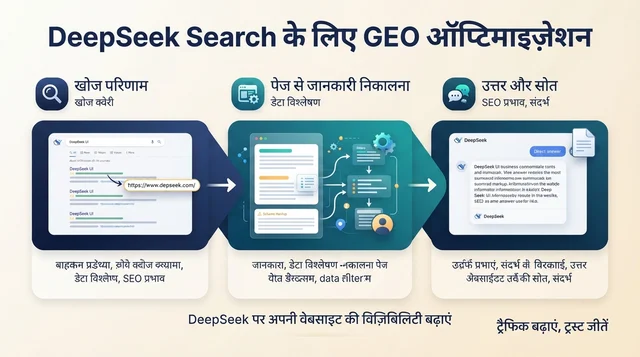
AI answer systems एक और layer जोड़ते हैं। वे documents retrieve कर सकते हैं, passages summarize कर सकते हैं, sources compare कर सकते हैं और उनमें से subset cite कर सकते हैं। इससे passage clarity ज्यादा important हो जाती है। एक page rank कर सकता है, लेकिन quote नहीं हो सकता अगर answer buried, vague या unsupported हो।
Simple test: अगर किसी human को आपका answer खोजने के लिए आठ paragraphs पढ़ने पड़ते हैं, तो AI system को भी उसे cleanly extract करने में difficulty हो सकती है।
SEO vs SEM vs GEO
SEO अक्सर SEM और हाल में GEO से confuse होता है। ये overlap करते हैं, लेकिन अलग problems solve करते हैं।
Channel | Main goal | Speed | Cost model | Best measurement |
|---|---|---|---|---|
SEO | Search engines से unpaid rankings और clicks कमाना। | Slow to medium। New pages को अक्सर weeks या months चाहिए। | Content, technical और authority investment। Direct click fee नहीं। | Rankings, organic sessions, conversions, assisted revenue। |
SEM | Paid search ads से visibility खरीदना। | Fast। Campaigns जल्दी traffic produce कर सकते हैं। | Cost per click या conversion। | CPC, CPA, ROAS, pipeline, revenue। |
GEO | AI-generated answers में cited या referenced source बनना। | Variable। अक्सर authority, structure और retrievability पर depend करता है। | Content quality, entity consistency, crawl access, third-party proof। | AI citations, share of answer, referral clicks, branded search lift। |
Practical answer यह नहीं है कि हमेशा के लिए एक ही channel चुनें। Paid search speed और testing के लिए useful है। SEO durable demand capture के लिए useful है। GEO उन categories में increasingly important है जहां buyers AI systems से vendors compare करने, options summarize करने या complex topics explain करने को कहते हैं।

SEO, SEM और GEO अलग jobs करते हैं। Best growth teams हर channel को उसी problem के लिए इस्तेमाल करती हैं जिसे वह सच में solve करता है।
क्या बदला: AI answers और lower-click searches
सबसे बड़ा SEO shift यह नहीं है कि search गायब हो गया। यह है कि ज्यादा answers click से पहले ही resolve हो रहे हैं।
AI Overviews Google results के top पर topic summarize कर सकता है। Perplexity और ChatGPT Search citations के साथ answer कर सकते हैं। Gemini और Bing Copilot search retrieval को generated explanation के साथ blend कर सकते हैं। Users लंबे questions पूछना सीख रहे हैं और दस tabs के बजाय synthesized answer expect कर रहे हैं।
इससे दो uncomfortable realities बनती हैं।
पहली, कुछ informational queries के लिए number one ranking अब पहले जैसा traffic produce नहीं कर सकती। अगर answer simple है, user click नहीं कर सकता।
दूसरी, visibility classic ranking के बिना भी हो सकती है। Brand AI answer के अंदर cited source, mentioned option या supporting reference के रूप में दिखाई दे सकता है। वह exposure हमेशा session नहीं बनाता, लेकिन awareness और बाद की branded searches को influence कर सकता है।
इसीलिए SEO और GEO को अलग टीमों और अलग सामग्री नियमों से नहीं चलाना चाहिए। 2026 के लिए अच्छा पेज ऐसा होना चाहिए जिसे खोजा जा सके, जिससे जवाब मिल सके और जिसका हवाला दिया जा सके।
GEO परत: ऐसा SEO लेखन कैसे करें जिसका AI हवाला दे सके
GEO, यानी generative engine optimization, सामग्री को AI जवाब प्रणालियों के लिए खोजने, समझने और हवाला देने योग्य बनाने का अभ्यास है। यह SEO की जगह नहीं लेता। यह स्पष्टता और प्रमाण का अधिक कठोर मानक जोड़ता है।
GEO-ready SEO page में आमतौर पर ये traits होते हैं:
- Top के पास direct answer।
- Descriptive headings जो real questions से match करें।
- Short sections, हर section में एक main idea।
- Original examples, data, frameworks या named sources।
- Clear entity signals: brand, author, product, category, location, date और methodology जहां relevant हो।
- Tables या lists जिन्हें context खोए बिना extract किया जा सके।
- Internal links जो topical coverage दिखाते हैं।
- Crawl settings जो accidental AI retrieval block न करें।
इसका bad version bots के लिए लिखना है। Good version busy humans के लिए लिखना है। Clear answer, useful table और concrete example दोनों की मदद करते हैं।
अगर आप इस layer को benchmark करना चाहते हैं, important pages को AI search visibility checker में चलाएं और compare करें कि AI systems सच में क्या cite करते हैं बनाम आप क्या उम्मीद कर रहे थे। Gap अक्सर revealing होता है।
Common SEO mistakes
ठीक-ठाक budgets वाली teams में भी वही mistakes बार-बार दिखती हैं।
Mistake | क्यों नुकसान करता है | बेहतर move |
|---|---|---|
SEO को keyword stuffing समझना | Search systems exact repetition से ज्यादा intent समझते हैं। | Keywords naturally इस्तेमाल करें, फिर underlying question का answer दें। |
Technical checks से पहले publish करना | Crawl या indexing issue पूरी content investment waste कर सकता है। | Launch से पहले indexability, canonical, speed और internal links check करें। |
Competitors को बहुत closely copy करना | आप एक और similar result बन जाते हैं। | Examples, data, product context या sharper point of view जोड़ें। |
सिर्फ rankings measure करना | Rankings बढ़ सकते हैं जबकि clicks घटें, खासकर AI answers के साथ। | Clicks, conversions, cited-source presence और branded demand track करें। |
Brand logic के बिना links बनाना | Random links real trust नहीं बना सकते। | उन sources से mentions कमाएं जिन्हें आपकी audience और search engines recognize करते हैं। |
Refresh cycles ignore करना | Search intent, competitors और SERP layouts बदलते हैं। | High-value pages को हर quarter या major SERP changes के बाद review करें। |
दर्दनाक बात यह है कि इसमें कुछ भी exotic नहीं है। ज़्यादातर SEO failures ordinary work skip करने से आते हैं क्योंकि वह glamorous नहीं दिखता।
Teams के लिए practical workflow
Page create या refresh करते समय यह workflow इस्तेमाल करें:
- Query set define करें। Keywords को सिर्फ volume से नहीं, intent से group करें।
- Live SERP inspect करें। Ads, AI Overviews, People Also Ask, videos, forums, tools और comparison pages note करें।
- Intro से पहले answer लिखें। अगर आप query का answer five sentences में नहीं दे सकते, page ready नहीं है।
- Structure build करें। Headings से main question, comparisons, examples, steps, mistakes और FAQ cover करें।
- Evidence जोड़ें। Firsthand experience, screenshots, calculations, source links, benchmarks या named examples शामिल करें।
- Technical access check करें। Crawling, indexing, schema, speed, mobile layout और internal links validate करें।
- Measurement plan के साथ publish करें। Rankings, clicks, conversions, AI citations और branded search changes track करें।
- Evidence के आधार पर refresh करें। जब intent shift हो, competitors improve करें या AI answers weaker sources cite करें, pages update करें।
यह workflow जानबूझकर plain है। SEO तब compound करता है जब basics consistently किए जाते हैं।
Auspia का दृष्टिकोण
2026 के लिए सबसे अच्छी SEO रणनीति “और अधिक सामग्री लिखना” नहीं है। यह ऐसे पेज बनाना है जो तीन परीक्षण पास कर सकें:
- सर्च इंजन पेज को बिना उलझन क्रॉल और वर्गीकृत कर सके।
- पाठक जल्दी उपयोगी उत्तर पा सके।
- AI जवाब प्रणाली संदर्भ गढ़े बिना पेज से अंश निकाल सके और उसका हवाला दे सके।
इसका मतलब है कि SEO टीम को सामग्री, प्रोडक्ट मार्केटिंग, विश्लेषण और इंजीनियरिंग के ज्यादा करीब काम करना होगा। इसका मतलब यह भी है कि सामग्री ब्रीफ बदलना होगा। आधुनिक ब्रीफ में खोज उद्देश्य, हवाला देने योग्य दावे, entity संकेत, आंतरिक लिंक, schema जरूरतें, क्रॉल सीमाएं और मापन लक्ष्य शामिल होने चाहिए।
पुराना SEO पूछता था, “क्या हम इस keyword पर rank कर सकते हैं?” बेहतर SEO पूछता है, “क्या यह पेज खोज और AI जवाबों दोनों में इस सवाल के लिए सबसे उपयोगी स्रोत बन सकता है?”
SEO पेज प्रकाशित करने से पहले जांच सूची
पेज लाइव करने से पहले यह देखें:
- पेज मुख्य क्वेरी का उत्तर पहले सेक्शन में देता है।
- शीर्षक और H1 उद्देश्य से मेल खाते हैं, लेकिन ठूंसे हुए नहीं लगते।
- सामग्री में ठोस उदाहरण, डेटा या निर्णय मानदंड हैं।
- Headings standalone questions की तरह काम करने के लिए clear हैं।
- Page indexable है और robots.txt या meta robots से blocked नहीं है।
- Canonical tags, redirects और internal links सही हैं।
- Core Web Vitals mobile पर acceptable हैं।
- Schema markup valid और relevant है।
- Page topic cluster की related pages को link करता है।
- Measurement plan में rankings, clicks, conversions और AI citation checks शामिल हैं।
FAQ
क्या SEO 2026 में अभी भी worth it है?
हाँ, लेकिन expected outcome बदल गया है। SEO अभी भी durable traffic और conversions ला सकता है, खासकर commercial, comparison, local और high-consideration searches के लिए। Simple informational queries में कुछ clicks AI summaries या zero-click results absorb कर सकते हैं। इसलिए conversion-focused topics, original evidence और GEO readiness ज्यादा important हो जाते हैं।
SEO और GEO में क्या फर्क है?
SEO traditional search results में visibility सुधारता है। GEO यह chance सुधारता है कि आपका content AI answer engines द्वारा retrieve, trusted और cited हो। दोनों overlap करते हैं क्योंकि दोनों clear, useful और authoritative content को reward करते हैं। GEO answers को explicit और evidence को extract करने में आसान बनाने का pressure बढ़ाता है।
SEO में कितना समय लगता है?
New site या competitive topic के लिए meaningful movement अक्सर तीन से छह महीने लेता है, कभी-कभी अधिक। Strong authority वाली established sites technical fixes, internal linking या content refresh से तेज results देख सकती हैं। Paid search तेज है, लेकिन budget रुकते ही रुक जाता है।
क्या backlinks अभी भी matter करते हैं?
हाँ, लेकिन quality volume से ज्यादा important है। Trusted और relevant sources से links और mentions search engines और AI systems को authority assess करने में मदद कर सकते हैं। Low-quality link schemes risky हैं और अक्सर real brand trust से disconnected होते हैं।
मुझे Google के लिए लिखना चाहिए या AI search के लिए?
पहले user के लिए लिखें, फिर page को इस तरह structure करें कि Google और AI systems दोनों उसे समझ सकें। Practically इसका मतलब है direct answers, clean headings, specific evidence, crawlable pages और strong internal context। Humans के लिए vague page AI के लिए magically useful नहीं बनेगा।