Google I/O 2026: Search Gets Its Biggest Upgrade in 25 Years with AI Agents and Gemini 3.5 Flash
Summary
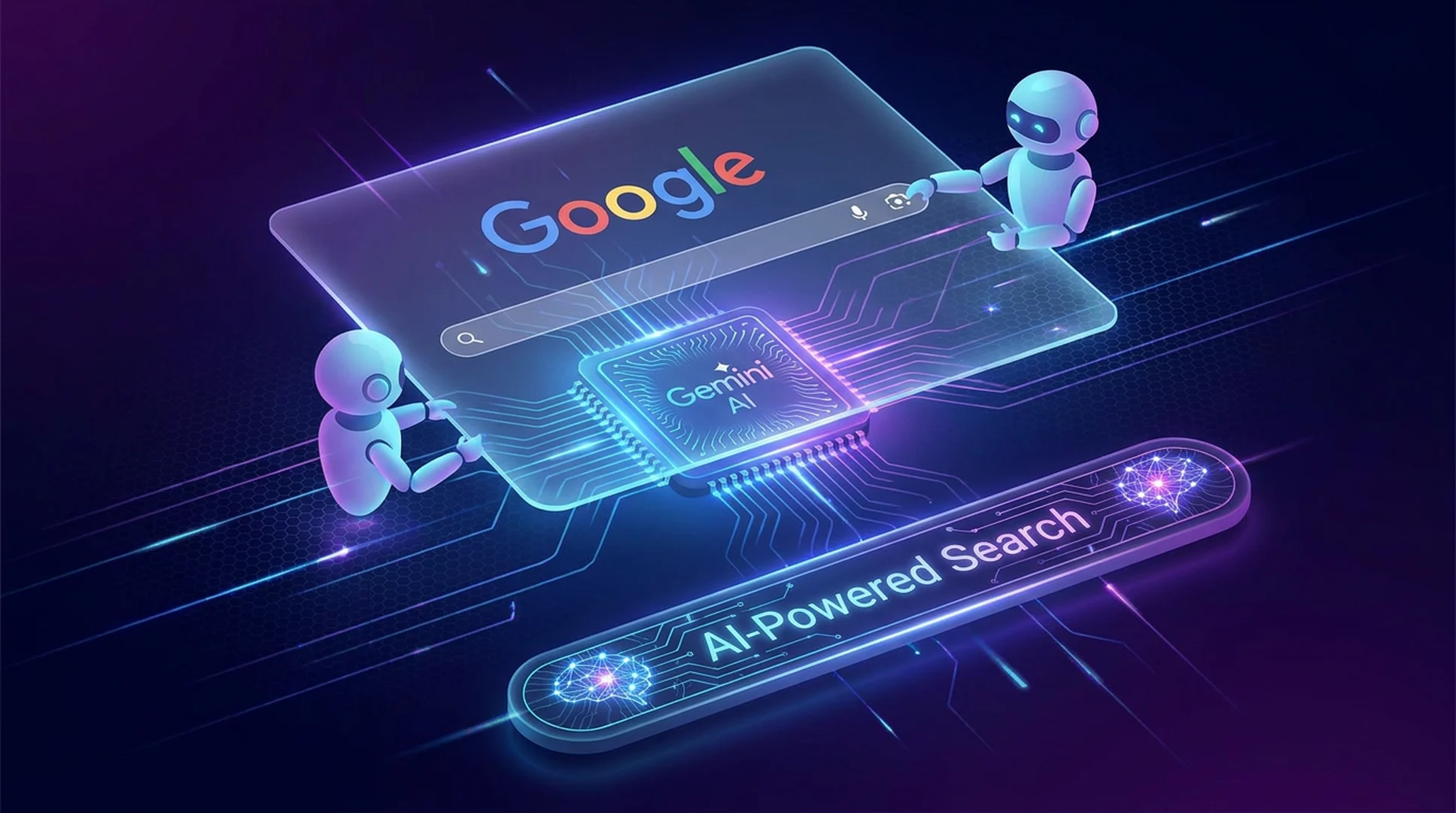
Google has unveiled sweeping changes to its search product at I/O 2026, deploying Gemini 3.5 Flash as the default model for AI Mode and introducing AI agent capabilities directly into the search experience. The company calls it the most significant upgrade to the search box in a quarter-century of existence — a bold claim that signals Google's full commitment to transforming search from a link-retrieval engine into an autonomous task-completion platform.

The Search Box Turns 25 — and Gets a Complete Reinvention
When Google launched its search box in 1998, the promise was simple: type words, get links. Twenty-five years later, that fundamental interaction model is being rewritten. At Google I/O 2026, the company announced that the search box will now support AI agent functionality — meaning users won't just find information, they'll be able to delegate tasks directly through the search interface.
The centerpiece of this transformation is Gemini 3.5 Flash, which becomes the default model powering Google's AI Mode. The choice of Flash over the more capable Pro variant is telling: Google is prioritizing speed and efficiency for search-time interactions, where latency directly impacts user experience. Gemini 3.5 Flash is designed to deliver rapid, context-aware responses while maintaining the quality bar users expect from Google's AI features.
AI Agents: From Search to Action
The introduction of AI agents into search represents a philosophical shift. Traditional search is passive — users query, scan results, click through, and complete tasks on third-party sites. AI agents invert this model: users describe what they want to accomplish, and the agent works to complete it within the search interface itself.
This has massive implications for the digital ecosystem. If users can book reservations, compare products, fill out forms, or navigate multi-step workflows without ever leaving Google's search interface, the value of traditional organic search rankings diminishes. Websites that once thrived on being the destination in a search journey may find themselves reduced to data sources that feed Google's agent workflows.
For businesses, this means optimization strategies must evolve beyond ranking for keywords. The new game is about becoming a reliable data source that AI agents can trust and integrate with — a concept Google itself has been reinforcing through its official documentation on Answer Engine Optimization (AEO) and Generative Engine Optimization (GEO).
What This Means for SEO and the Open Web
Google's official position, reiterated in new documentation released alongside I/O 2026, is that AEO and GEO are still fundamentally SEO. The company explicitly states that publishers don't need special files like llms.txt, content chunking strategies, or exotic schema markup. Instead, the focus should remain on producing unique, high-quality content and maintaining solid technical SEO foundations.
This is both reassuring and strategically convenient for Google. By framing AI optimization as "just SEO," Google avoids creating a parallel optimization ecosystem that could fragment the industry. It also keeps control of the AI layer firmly in Google's hands — publishers optimize their content, and Google's AI decides how to use it.
However, the practical reality is more nuanced. As AI Mode becomes the default search experience for millions of users, the metrics that matter are shifting. Click-through rates, dwell time, and traditional ranking positions may become less relevant as AI Overviews and agent interactions absorb user attention before they ever reach a traditional search result page.
The Competitive Landscape
Google's moves at I/O 2026 come as the company faces unprecedented pressure from AI-native search alternatives. Perplexity, ChatGPT Search, and other AI-first products have demonstrated that users are willing to abandon traditional search interfaces when offered more direct, conversational alternatives.
By integrating AI agents directly into its search product — rather than launching a separate AI search app — Google is betting that its existing user base of billions will follow the evolution in place. The company's distribution advantage is enormous: rather than convincing users to adopt a new product, it's upgrading the one they already use daily.
The deployment of Gemini 3.5 Flash as the default model also signals Google's confidence in its AI infrastructure. The Flash variant's speed and efficiency are critical for a search experience where users expect near-instantaneous responses. Any perceptible lag in AI Mode would drive users back to traditional search — or to competitors.
Looking Ahead
Google I/O 2026 marks a definitive inflection point for search. The product that dominated information retrieval for two decades is now transforming into something fundamentally different — an AI-powered task completion engine that happens to use the same search box users have known since 1998.
For publishers, marketers, and businesses, the message is clear: the future of search visibility isn't about gaming algorithms or chasing ranking factors. It's about producing genuinely valuable content that AI systems — both Google's and its competitors — can trust, cite, and integrate into their responses. The brands that thrive in this new era will be those that become indispensable knowledge sources, not just high-ranking web pages.
Sources: Google Blog, Search Engine Journal, SE Roundtable