Apple Clarifies Applebot-Extended Rules Do Not Affect Search Rankings
Apple has updated its official Applebot documentation to explicitly state that site rules for Applebot-Extended are not considered in search ranking. The clarification, published September 4, 2026, comes weeks before the public release of iOS 27 and addresses a growing question among web publishers about the relationship between AI training opt-outs and search visibility.
What Changed
Apple added a single line to its About Applebot support page: "Site rules for Applebot-Extended are not considered in ranking for Search."
The statement appears in the "About search rankings" section, which lists factors Apple Search may consider when ranking results, including aggregated user engagement, content relevance, link quality, user location signals, and webpage design characteristics. The new line makes clear that Applebot-Extended directives—used to opt out of AI training—have no bearing on these ranking factors.
Background: What Is Applebot-Extended?
Applebot is Apple's web crawler, used to power search functionality across Spotlight, Siri, and Safari. In early 2025, Apple introduced Applebot-Extended as a separate user agent specifically for training generative AI models powering Apple Intelligence and other AI features across Apple products.
The distinction matters because web publishers have two separate controls:
- Applebot: Controls whether your content appears in Apple's search results (Spotlight, Siri, Safari)
- Applebot-Extended: Controls whether your content is used to train Apple's generative AI models
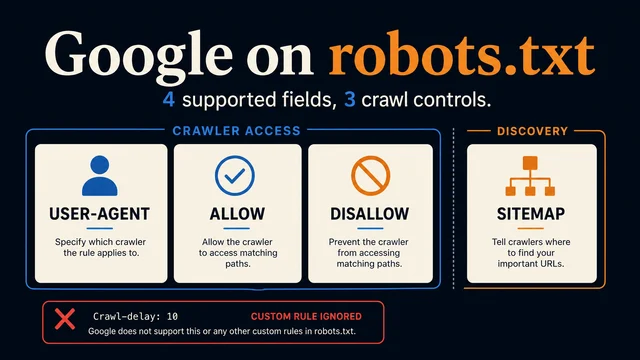
Publishers can block Applebot-Extended in their robots.txt file to opt out of AI training while still allowing their content to appear in Apple Search. The updated documentation confirms this choice has no ranking penalty.
The Google Parallel
Apple's clarification mirrors a similar distinction Google made with Googlebot-Extended. When Google introduced its AI Overviews and generative search features, it created a separate user agent for AI training purposes. Google's documentation similarly indicates that blocking Googlebot-Extended does not affect traditional search rankings.
This parallel suggests an emerging industry pattern: major tech companies are separating AI training crawlers from search crawlers, and explicitly stating that opting out of AI training does not penalize search visibility.
Why This Matters Now
The timing is notable. iOS 27, which includes significant upgrades to Siri and Apple Intelligence, is expected to ship to the public in the coming weeks. Apple's updated documentation ensures publishers understand the rules before the expanded AI features reach hundreds of millions of users.
For publishers who have been blocking Applebot-Extended due to concerns about AI training, this clarification provides assurance that their search visibility remains intact. For those who have been allowing Applebot-Extended, it confirms that their choice to participate in AI training does not provide a ranking boost.
What Apple Search Does Consider
The documentation lists several factors that may influence Apple Search rankings:
- Aggregated user engagement with search results
- Relevancy and matching of search terms to webpage topics and content
- Number and quality of links from other pages on the web
- User location based signals (approximate data)
- Webpage design characteristics
Apple notes that these factors may be used "with no (pre-determined) importance of ranking," suggesting the system uses machine learning to weight factors dynamically rather than following a fixed algorithm.
What Remains Unclear
Several questions remain unanswered:
- How much traffic comes from Apple Search? Unlike Google Search, Apple does not publish market share data for Spotlight, Siri, and Safari search combined. Publishers have limited visibility into how much traffic comes from Apple's ecosystem.
- What does "not considered in ranking" mean technically? Does Apple completely ignore Applebot-Extended directives when calculating rankings, or does it mean the directives don't directly lower rankings? The documentation doesn't specify.
- Will this change as Apple Intelligence evolves? The clarification applies now, but Apple's AI features are rapidly evolving. Future iterations may blur the line between search and AI-generated answers.
- How do nosnippet directives interact with rankings? The documentation mentions that publishers can use the nosnippet meta tag to opt out of "broad world knowledge answers" in Siri and Search. It's unclear whether nosnippet affects rankings.
What Publishers Should Do
For publishers currently blocking Applebot-Extended:
- No action needed if your goal is to opt out of AI training while maintaining search visibility. The documentation confirms your search rankings are not affected.
- Monitor traffic from Apple devices if possible, though granular data may be limited.
- Review your AI training policies across all major platforms (Google, Apple, Microsoft) to ensure consistency.
For publishers allowing Applebot-Extended:
- Understand what you're opting into: Your content may be used to train Apple's generative AI models.
- No ranking benefit: The documentation makes clear that allowing Applebot-Extended does not provide a ranking advantage.
- Consider your content strategy: If your content appears in AI-generated answers, ensure you're comfortable with how it's being used.
The Broader Context
This clarification is part of a larger conversation about the relationship between AI training and search visibility. As AI-generated answers become more prevalent in search results, publishers are grappling with fundamental questions:
- Should they allow their content to be used for AI training?
- Does allowing AI training provide any search visibility benefit?
- How do they balance copyright concerns with discoverability?
Apple's documentation provides one data point: opting out of AI training does not penalize search visibility. Whether other platforms follow the same pattern remains to be seen.
Sources
- About Applebot - Apple Support (Published September 4, 2026)