2026 की समस्या: AI जवाब पुराने ब्रांड डेटा को नए खरीदार जोखिम में बदल सकते हैं
2026 में GEO का सबसे आसानी से छूटने वाला विवरण keyword coverage नहीं, बल्कि brand facts की accuracy है। AI search कई स्रोतों से जानकारी मिलाता है: आधिकारिक site, पुराने partner pages, outdated directories, comparison articles, forums, media, review sites और competitor content. स्रोत विरोधाभासी हों, फिर भी जवाब आत्मविश्वासी लग सकता है।
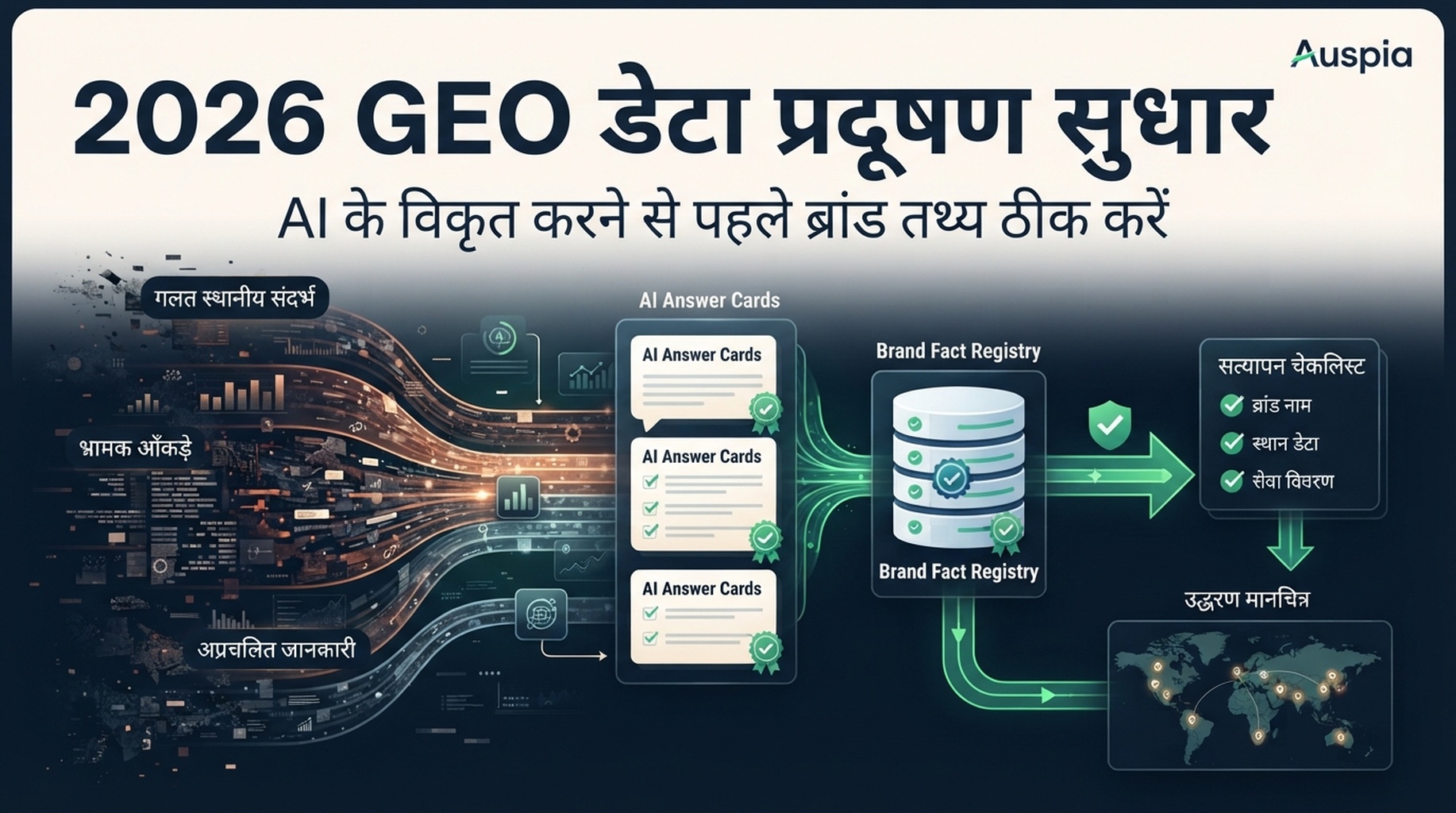
यही GEO में AI data pollution है: पुराने या inconsistent public sources उठाए जाते हैं, मिलाए जाते हैं और current truth की तरह दोहराए जाते हैं। B2B और SaaS brands के लिए यह demo intent, sales objections, procurement trust और vendor shortlist को प्रभावित करता है।
GEO में AI डेटा प्रदूषण कैसा दिखता है
संकेत | AI जवाब में असर | जोखिम |
|---|---|---|
पुराने दाम | पुराने plans या गलत enterprise range | buyer पहले ही हट जाता है |
गलत feature scope | मौजूद feature गायब या उल्टा | sales को unnecessary objections मिलते हैं |
कमजोर category language | generic positioning | differentiation घटता है |
biased comparison | पुराने third-party claims दोहरते हैं | traffic competitor को जाता है |
अस्पष्ट source hierarchy | secondary pages cite होते हैं | official docs कमजोर पड़ते हैं |
यह क्यों छूटता है
कई teams केवल यह पूछती हैं कि ChatGPT हमें mention करता है या Perplexity cite करता है। लेकिन mention गलत, अधूरा, पुराना या commercially harmful हो सकता है। GEO teams को presence, accuracy और commercial usefulness तीनों मापने चाहिए।
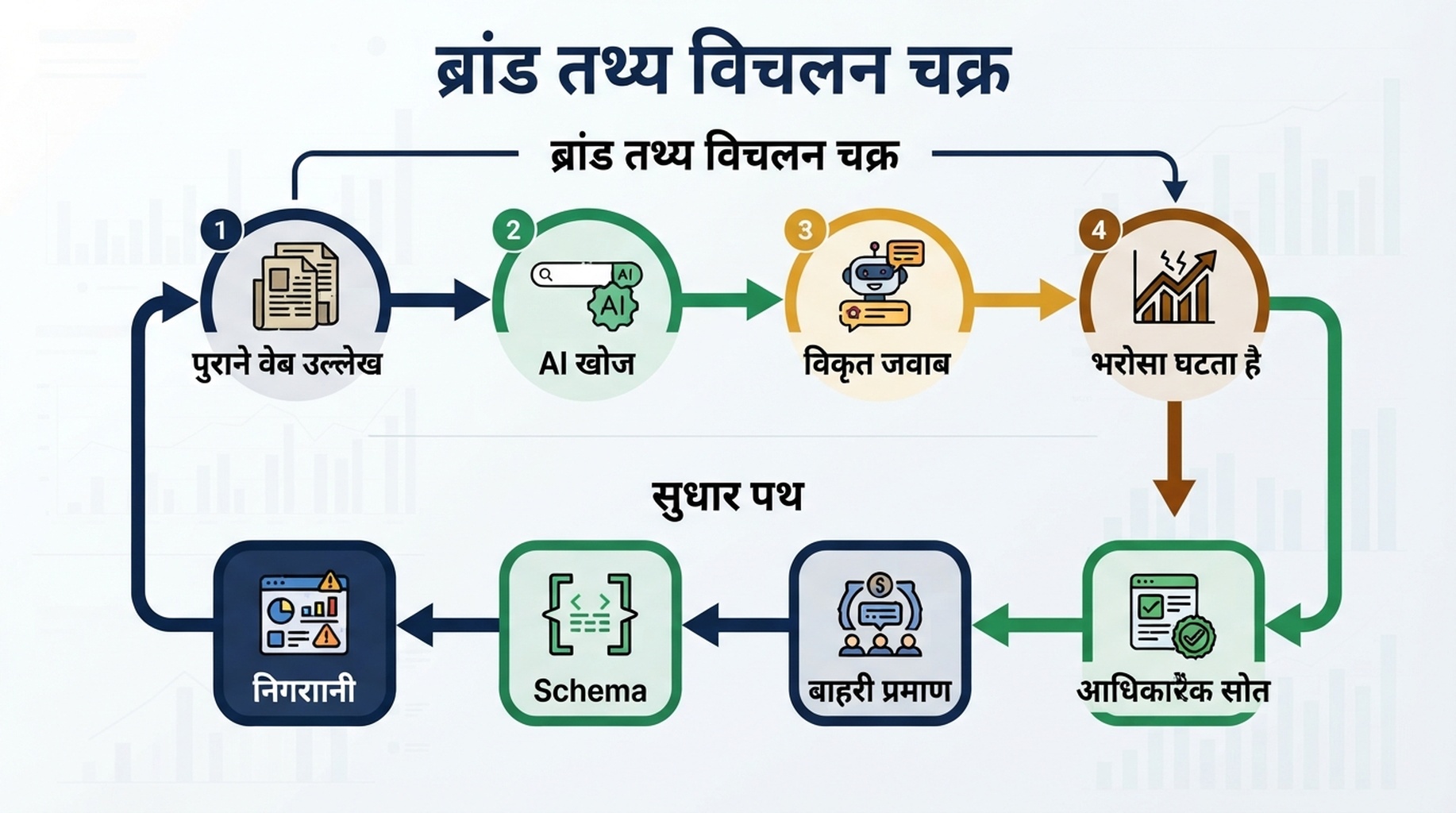
ब्रांड तथ्य विचलन चक्र
- brand web से तेज बदलता है।
- पुराने sources crawlable रहते हैं।
- AI mixed evidence देखता है।
- answer contradictions को एक confident sentence में compress करता है।
- buyer उसी पर action लेता है।
- polluted answer और downstream content बनाता है।
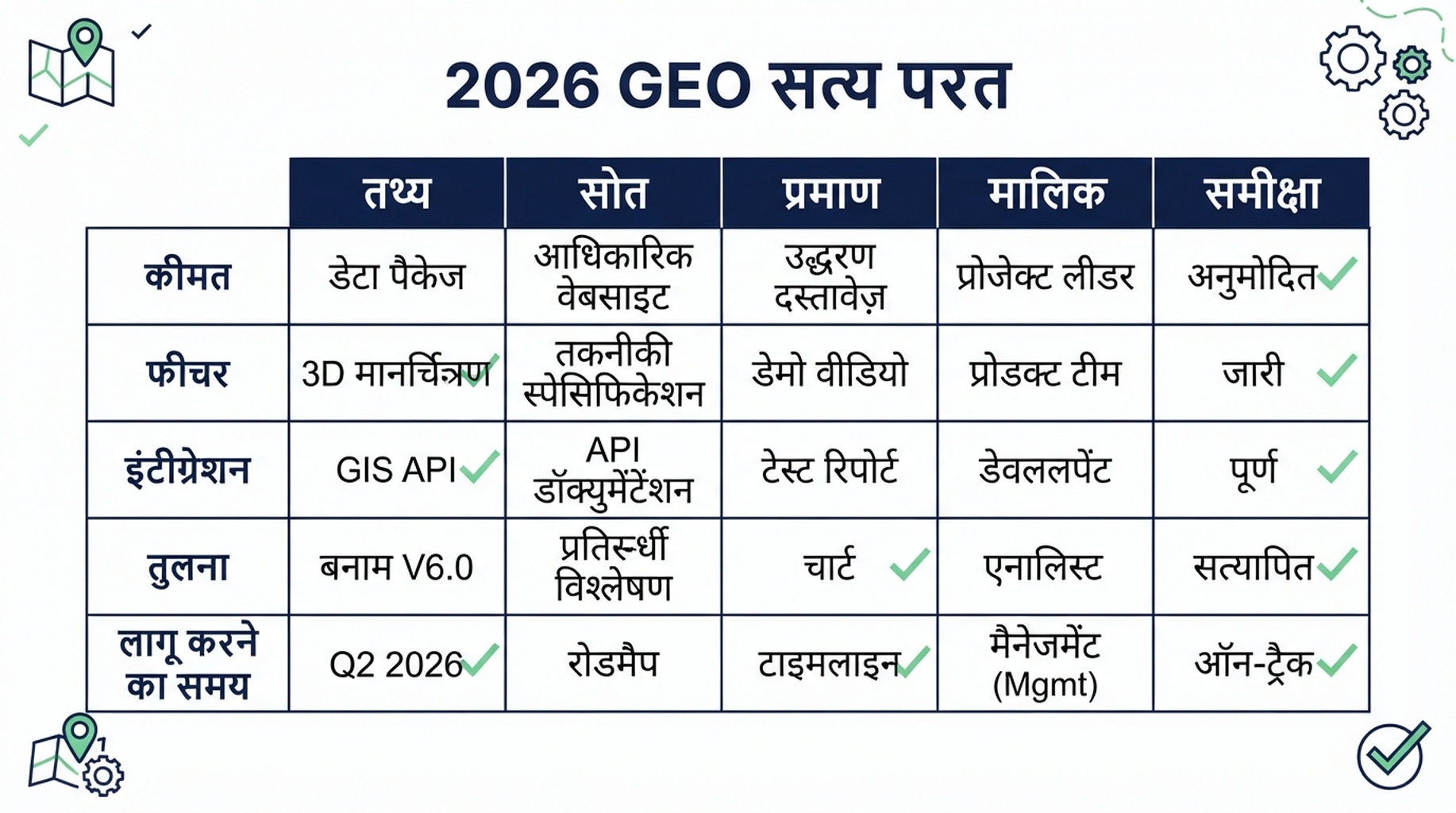
2026 GEO सत्य परत
Asset | उद्देश्य |
|---|---|
Brand fact registry | important claims का canonical version |
Official proof pages | AI के लिए citable sources |
Structured data | machine-readable context via Schema |
External proof | partners, reviews, community |
Monitoring queue | errors detect और repair करना |
पाँच practical fixes
1. Current facts page बनाएं
Product क्या है, किसके लिए है, क्या करता है, क्या नहीं करता, pricing boundary, security links और review date साफ लिखें।
2. Comparison pages फिर लिखें
Verifiable criteria दें, facts और opinion अलग करें, official docs link करें और unverifiable competitor claims से बचें।
3. Misconception blocks जोड़ें
AI जो गलती बार-बार करता है, उसे high-intent page पर सीधे correct करें।
4. External profiles साफ करें
Review sites, marketplaces, partner directories, GitHub, app stores और पुराने media kits update करें।
5. Accuracy मापें
हर जवाब को इस तरह अंक दें: ब्रांड अनुपस्थित, ब्रांड मौजूद पर गलत, ब्रांड मौजूद पर अधूरा, ब्रांड सही पर कमजोर, या ब्रांड सही और व्यावसायिक रूप से उपयोगी।
14-day repair sprint
30-50 prompts collect करें, AI answers capture करें, polluted sources trace करें, official pages repair करें, external profiles update करें, proof assets publish करें और same prompts retest करें। Baseline के लिए Auspia का AI Search Visibility Checker उपयोगी हो सकता है।
क्या measure करें
Brand answer accuracy, wrong-claim frequency, source concentration, high-intent prompt coverage, commercial usefulness और correction latency track करें।
FAQ
GEO में AI डेटा प्रदूषण क्या है?
पुरानी, गलत, पक्षपाती, दोहराई गई या असंगत सार्वजनिक जानकारी, जिसे AI खोज ब्रांड जवाबों में मिला सकती है।
पहले citations या accuracy?
ब्रांड के लिए महत्वपूर्ण प्रश्नों में पहले सटीकता आती है। यदि उद्धृत जानकारी गलत है, तो अधिक उद्धरण मदद नहीं करते।
निष्कर्ष
2026 में छूटने वाला GEO विवरण यह नहीं कि AI ब्रांड का उल्लेख कर सकता है या नहीं। असली सवाल है कि AI ब्रांड का सही संस्करण दोहरा सकता है या नहीं। सत्य परत बनाएं, जोखिम वाले स्रोत साफ करें, तथ्यों को संरचित करें, भरोसेमंद प्रमाण जोड़ें और सटीकता लगातार देखें।
Author: Lydia Hart, Auspia में ब्रांड एंटिटी रणनीतिकार। Lydia ब्रांड तथ्यों, एंटिटी स्थिरता, श्रेणी भाषा और नॉलेज ग्राफ तैयारी पर लिखती हैं।